
2-person sleeping bag
4 products
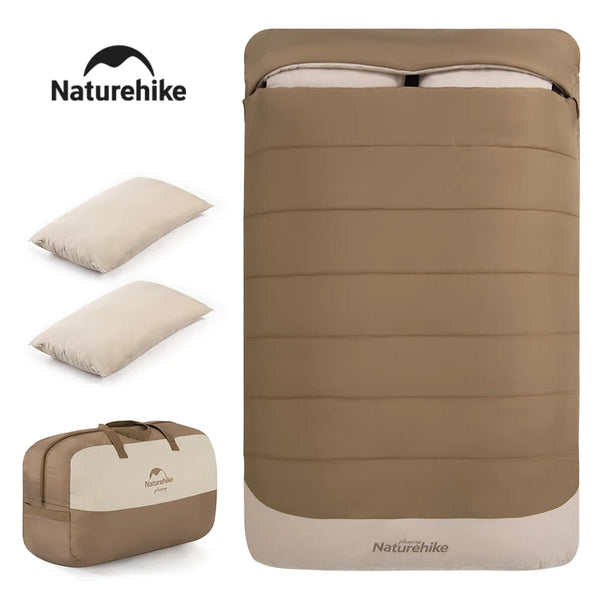
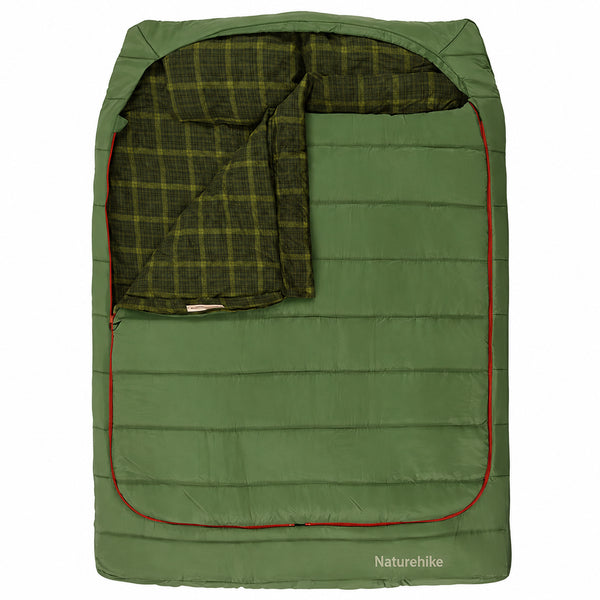
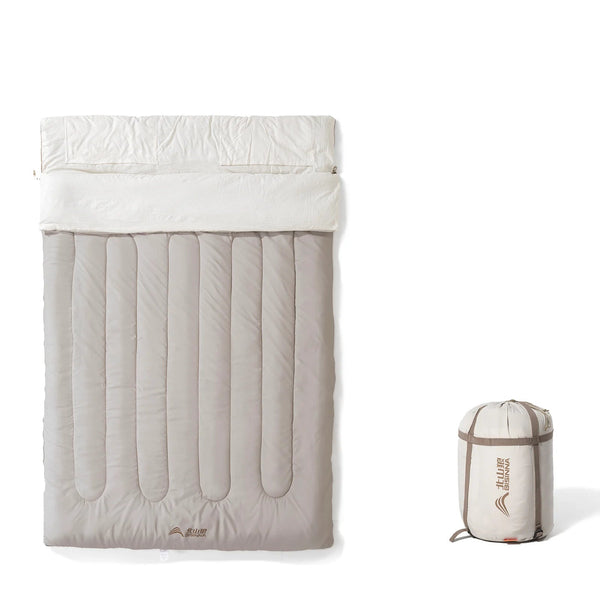
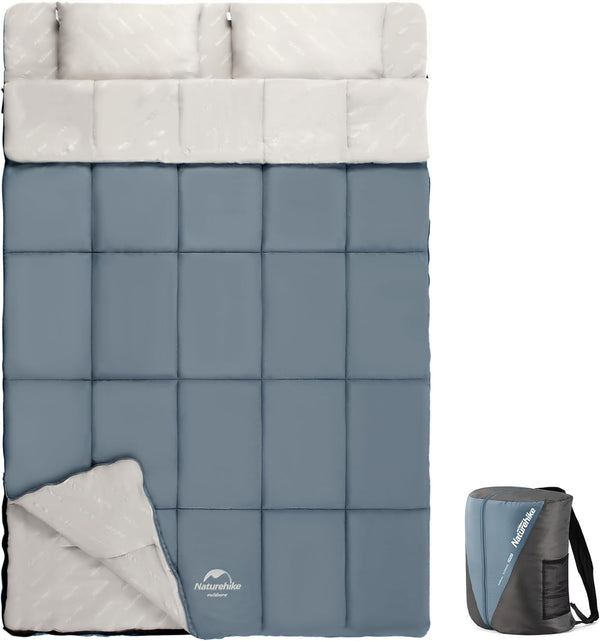
The 2-person sleeping bag is designed for a specific purpose: sleeping together in a single insulated space without carrying two separate bags. Before choosing between a double sleeping bag and two single models, several criteria can help guide your choice based on your intended use.
Double sleeping bag or two single bags: an objective comparison
The double sleeping bag offers a practical advantage over two separate bags: the body heat of both sleepers accumulates within the same space, which can provide an estimated temperature increase of 3 to 5 °C compared to the stated temperatures. This estimate has not been measured on the models in this selection and assumes that the sleepers are in physical contact. In return, one person's movements may disturb the other, and differing temperature preferences—one sleeper feeling cold while the other does not—are harder to manage in a shared space.
A double sleeping bag is also heavier and bulkier than a single bag: it is primarily suited for car camping, van life, or stationary bivouacs, rather than long-distance trekking. For two self-sufficient trekkers on a multi-day trip, two lightweight single bags from the trekking collection remain better suited.
Double sleeping bag: dimensions and sizes
A standard double sleeping bag measures between 140 and 160 cm in internal width, compared to 70 to 80 cm for a single model. The standard length accommodates people up to 185 cm tall. For couples where one sleeper is taller than 185 cm, it is essential to check the bag's overall length before purchasing.
An XXL 2-person sleeping bag is wider than 160 cm, allowing two people to sleep without interfering with each other and to move freely inside the bag. This size is also suitable when a child shares the bag with an adult—a common arrangement in family camping for children up to 7 or 8 years old.
What comfort temperature is suitable for a 2-person sleeping bag?
The selection includes four models with comfort temperatures of +6 °C (Naturehike Quiye, limit +2 °C), +6 °C (Naturehike 2-person thick, limit +1 °C), +10 °C (Bisinna, limit +5 °C, manufacturer's value not certified), and +15 °C (Naturehike Double, limit +10 °C). The standards applied are specified on each product page. A comfort temperature of +15 °C is intended for summer nights in lowlands or at low altitudes, from June to August; +6 °C is suitable for cooler midseason nights. Below the comfort temperature, an additional blanket or thermal sleepwear can compensate for the difference.
For midseason trips with nights dropping below 5 °C, or for mountain camping, a 2-person sleeping bag with a comfort temperature of 0 °C or lower is preferable. This type of model is not available in the current selection. For winter bivouacs for couples in cold conditions, the extreme cold collection of single models meets these needs without compromising warmth.
To understand the difference between comfort, limit, and extreme temperatures, see the sleeping bag temperatures guide. For a camping trip where each person sleeps in their own bag, the camping duvet collection includes single models.
Extreme cold 2-person sleeping bag: what you need to know
An extreme cold 2-person sleeping bag with a comfort temperature below -5 °C is rare on the market—manufacturers prefer single models for winter conditions, where a fitted mummy shape is essential to minimize heat loss. A large double bag cannot achieve the same level of air retention as a single mummy model. For two people on a winter bivouac, two single bags certified to EN 13537 with a comfort temperature of -10 °C or lower remain the reliable solution.