
Naturehike sleeping bag
27 products
Naturehike is an outdoor equipment brand whose sleeping bag range runs from occasional down camping bags to trekking sleeping bags with natural fill, with comfort temperatures from +15°C to -21.4°C depending on the model.
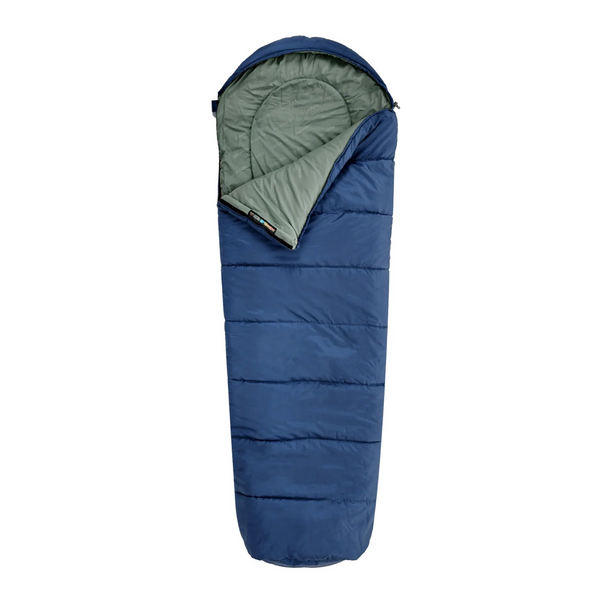
Camping sleeping bag (-5°C) | Naturehike MJ600
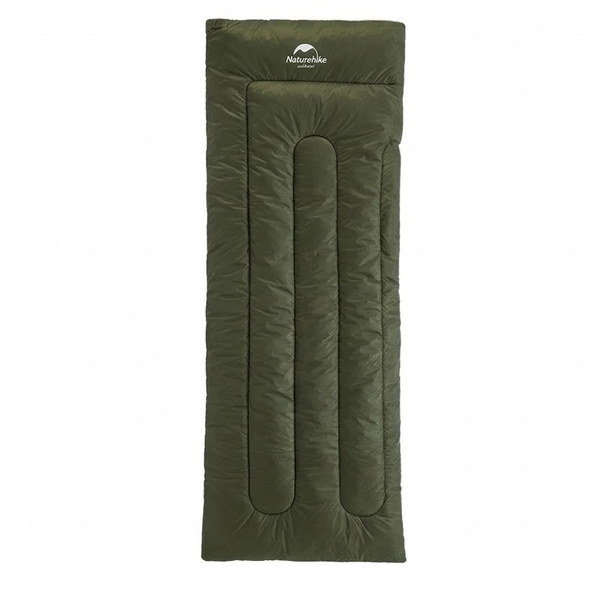
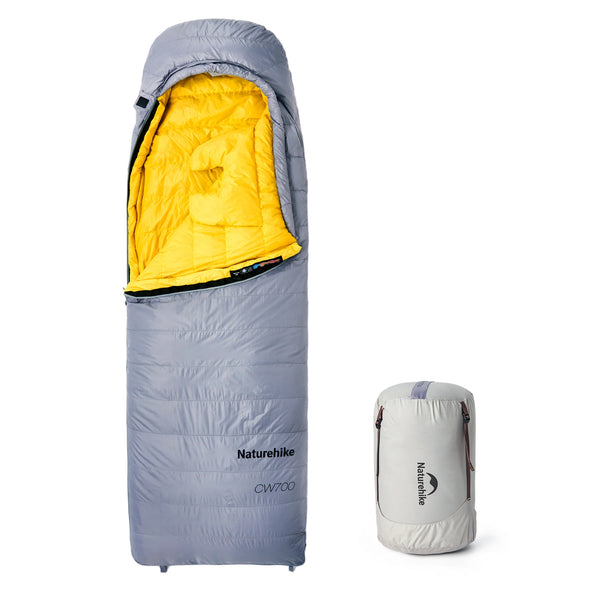
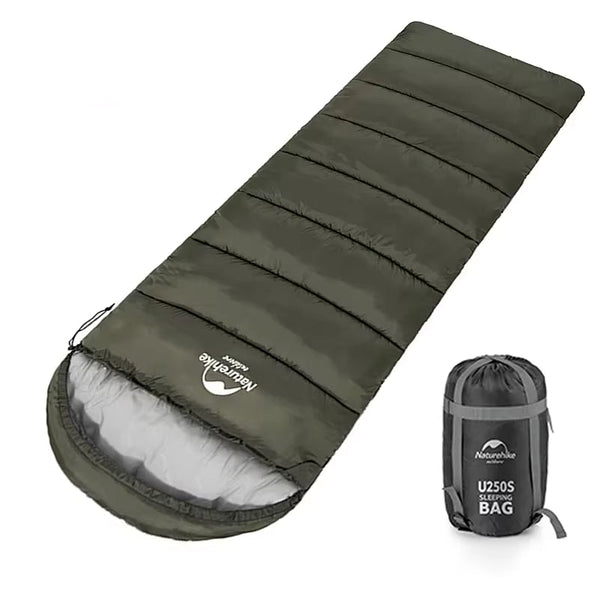
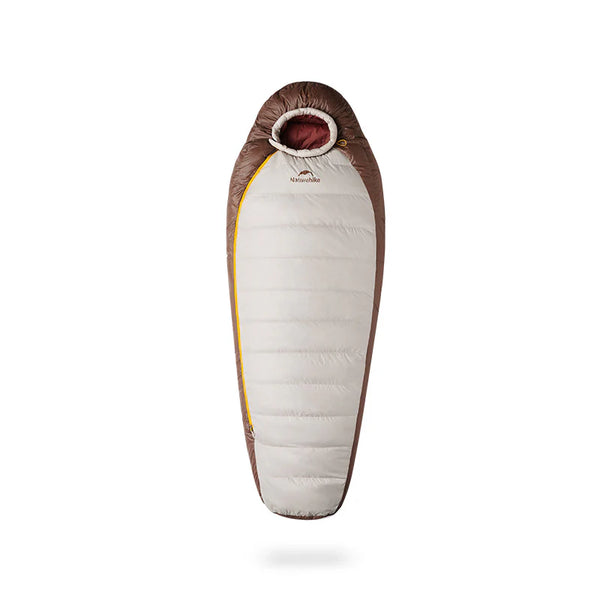
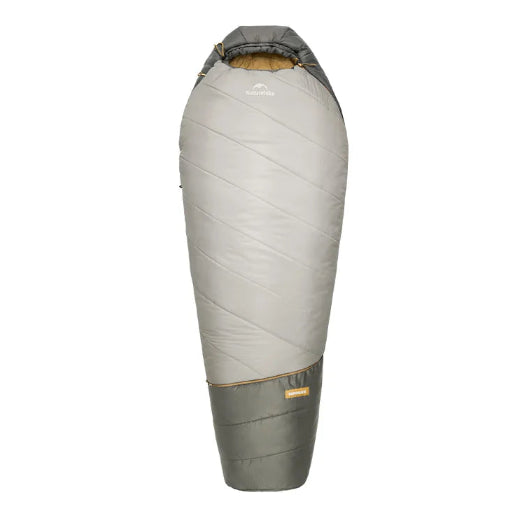
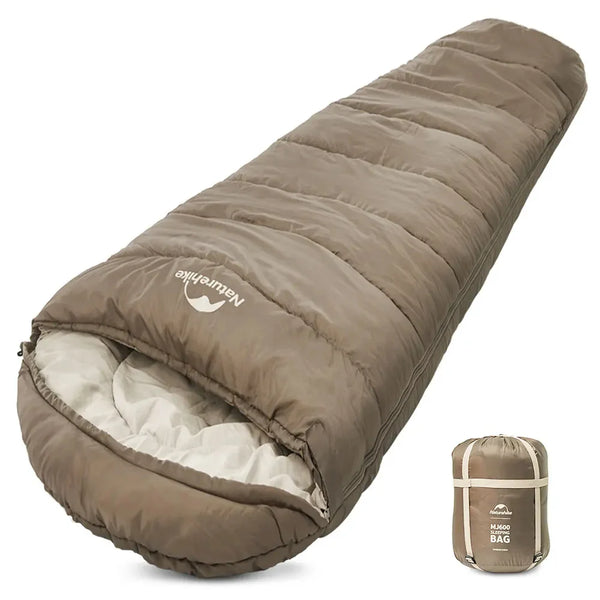
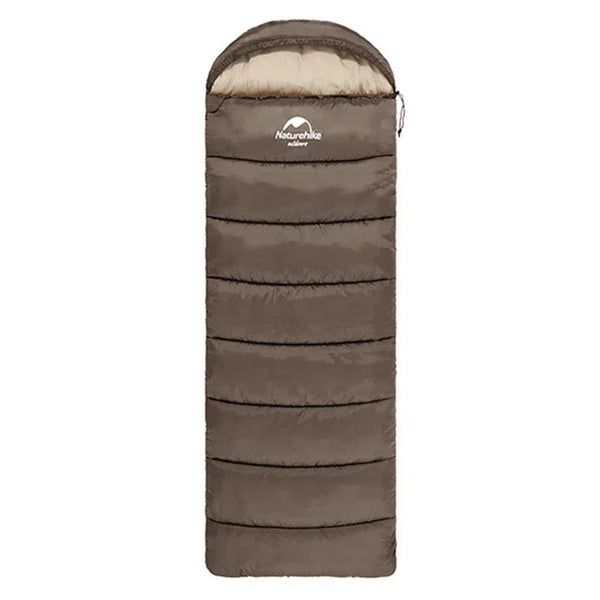

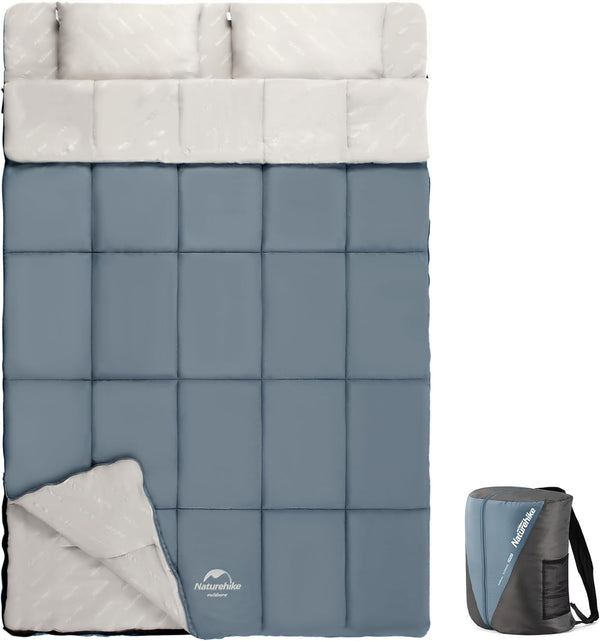

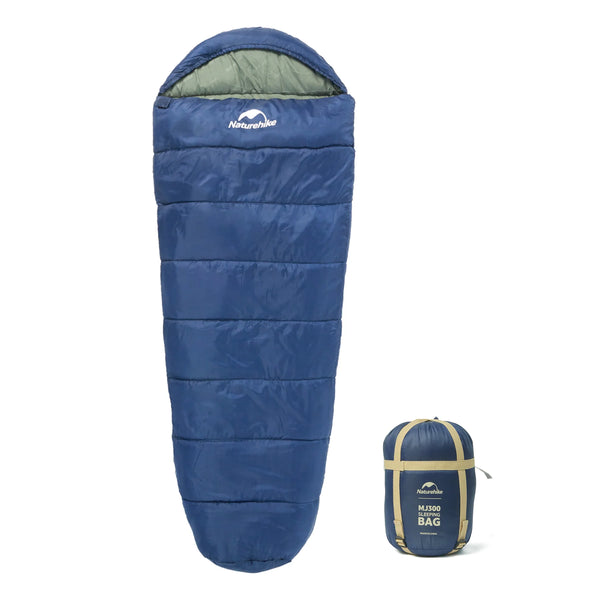
A clear range from camping to trekking
The Naturehike range covers camping and 3-season hiking in synthetic (from under 1 kg to over 5 kg) and natural down (650 to 850 fill power, from approximately 0.4 to 1.8 kg) for hikers looking for a lightweight and compact bag.
Down or synthetic fill: what Naturehike offers
Naturehike down-filled sleeping bags use duck or goose down with varying densities depending on the series (650 to 850 fill power). Weight and compressed volume are detailed on each product page. Synthetic models are more tolerant of moisture and easier to care for, but heavier for the same warmth: a good choice for spring outings in changing conditions.
- Mummy shape with hood: found on most trekking models, useful whenever nights drop below 5°C
- Zip: single or two-way depending on the model, specified on each product page
- Baffle construction: keeps the down compact and evenly distributed along the length of the bag when the model is equipped with it
- Compression sack included: reduces volume for transport; do not use for long-term storage (contents of the delivery specified on the product page)
Naturehike compared to other brands: who is it for?
Naturehike covers more fills (down and synthetic) and formats (mummy, quilt, double) than a brand focused on ultralight down like Aegismax. It is a good playground for regular hikers who want a warm down bag for 3-season trekking. Temperatures follow ISO 23537 / GB/T 38426 on most product pages; the standard applied (or its absence for H150, LW180 and one of the two U150 product pages) is indicated on each product page.
For outings that require greater versatility across the temperature range—alternating warm and cool nights, bivouacking at varying altitudes—Duvet Nomade's 3-season sleeping bag collection offers a selection of models suited to these mixed conditions, from all brands.
Which Naturehike for which night?
- Comfort -21.4°C to -10.8°C: UL1100, JV1300, BASE1100, Snow Petrel PRO700 and SP1000, approximately 1 to 1.8 kg. See the extreme cold collection.
- Comfort -7°C to -2°C: MG360 and MJ600 (synthetic) and one cotton model, approximately 1.1 to 2.3 kg.
- Comfort -1.7°C to +4°C: CW700, U250S, P400, SP400, MJ300 and AIR300, approximately 0.6 to 2.2 kg.
- Comfort +5°C to +15°C: MG120, Cicada, CW280, U150, H150, LW180 and the double models, approximately 0.3 to 5.4 kg. See the down camping collection and the 2-person collection.
The comfort, limit and extreme guide explains the essentials for correctly interpreting these values. Choose your range, then order now.