
-5 degree sleeping bag
4 products
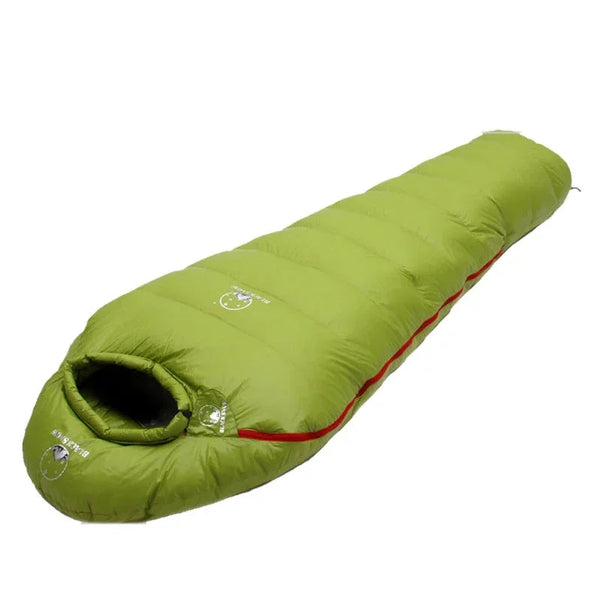
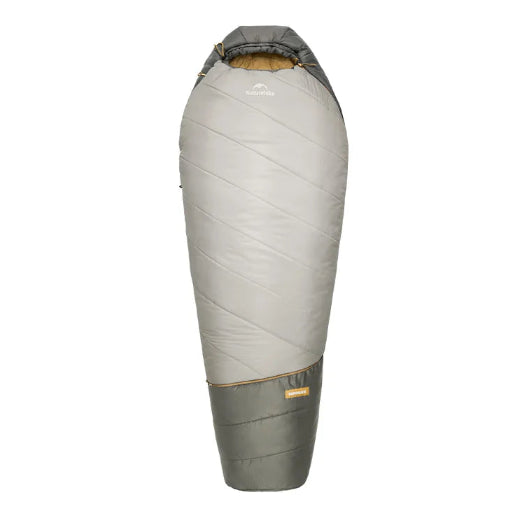
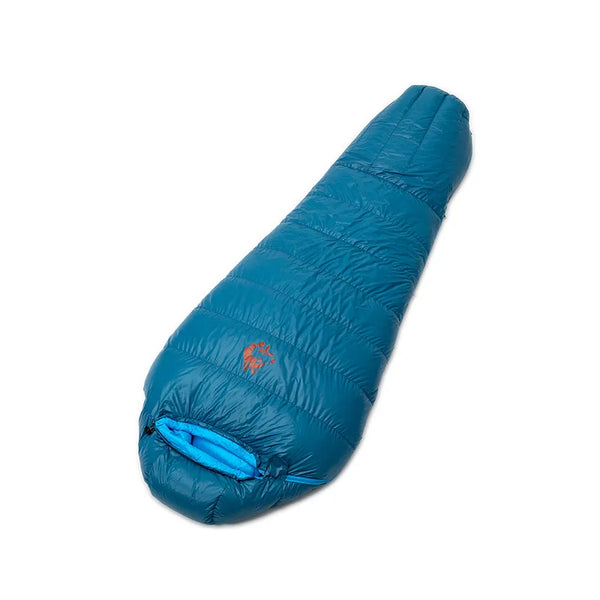
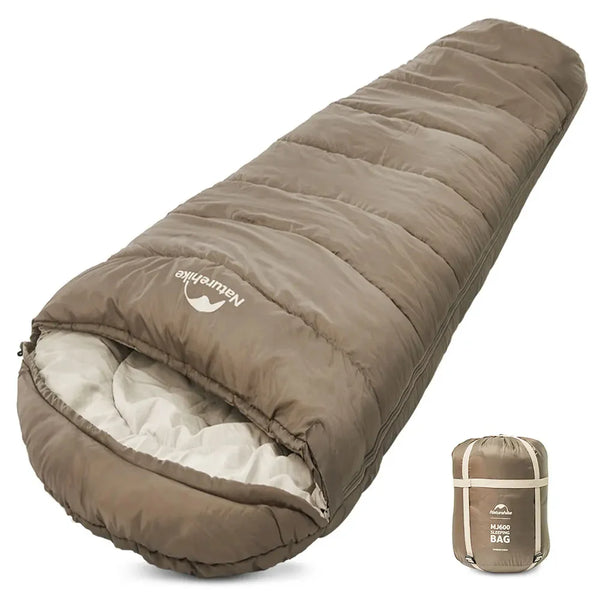
-5 degree sleeping bag: what the comfort temperature means in real conditions
The comfort temperature of a -5 degree sleeping bag indicates the minimum temperature at which an average sleeper can sleep without feeling cold under standardized conditions: an insulating mattress with an R-value of at least 3.5, long thermal underwear, hood closed, and a dry environment. In real-world bivouac conditions at altitude, a margin of 3 to 5 °C is recommended to account for metabolism, fatigue, and ambient humidity. The limit temperature, here at -12 °C, corresponds to the tolerance threshold of a standard man, below which sleep becomes uncomfortable. The extreme temperature is a theoretical survival threshold and does not represent a usage value.
Synthetic insulation for a -5°C comfort sleeping bag
The -5 degree sleeping bag with hollow fiber synthetic insulation offers concrete advantages for certain uses: it retains partial insulation even when damp, it is easy to maintain (machine wash at 30 °C), and its purchase price is lower than an equivalent natural down model. The trade-off is a higher weight and compressed volume compared to a natural down -5 degree sleeping bag. For static bivouacs, car camping, or short trips without significant carrying constraints, this profile remains appropriate. For treks involving several days of carrying where weight is a priority, a 0 degree sleeping bag model in natural down generally offers a better weight-to-insulation ratio in a similar temperature range.
-5 degree or 0 degree sleeping bag: what is the difference for bivouacking?
A -5 degree comfort sleeping bag (negative) provides an additional thermal margin that is useful as soon as nights regularly drop below 0 °C: late-season mountain trips, autumn in the Alps or Pyrenees above 1,500 m, or mid-season outings with significant temperature fluctuations between day and night. For spring and summer outings up to 2,000 m where nights remain above 0 °C, a 0 degree sleeping bag is better sized and lighter. For winter bivouacs where nights are regularly below -7 °C, the -10°C collection provides the necessary margin.
The role of the insulating mattress with a -5°C bag
The mattress accounts for 40 to 50% of the total insulation of the sleeping system. Without a mattress with an R-value of at least 3.5, the ground absorbs body heat through conduction, and the temperatures advertised for the bag cannot be achieved in real conditions. For nights between -3 °C and -7 °C, an R-value of 4 is a reliable benchmark. A thermal liner can provide an additional margin of +3 to +5 °C, which is useful on colder nights or for those who feel the cold easily.