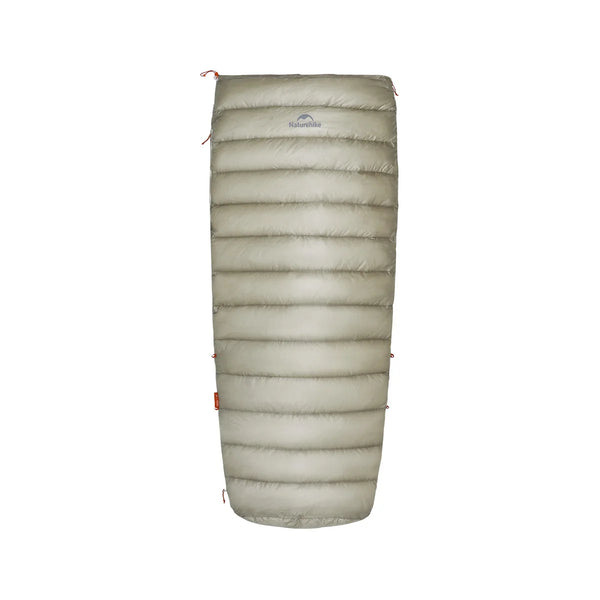
Quilt

3 products

Un quilt, ou couette de bivouac, est une alternative au sac de couchage traditionnel adoptée par les pratiquants qui cherchent à réduire le poids et le volume de leur équipement de nuit. Sans capuche intégrée ni dos isolé, il repose sur un principe simple : le garnissage compressé sous le corps perd l'essentiel de son pouvoir isolant, inutile de le conserver. Un duvet ultralight en format quilt permet ainsi d'atteindre des poids inférieurs à 400 g pour des températures de confort autour de 0°C, un niveau de légèreté difficile à égaler avec un sac de couchage conventionnel.

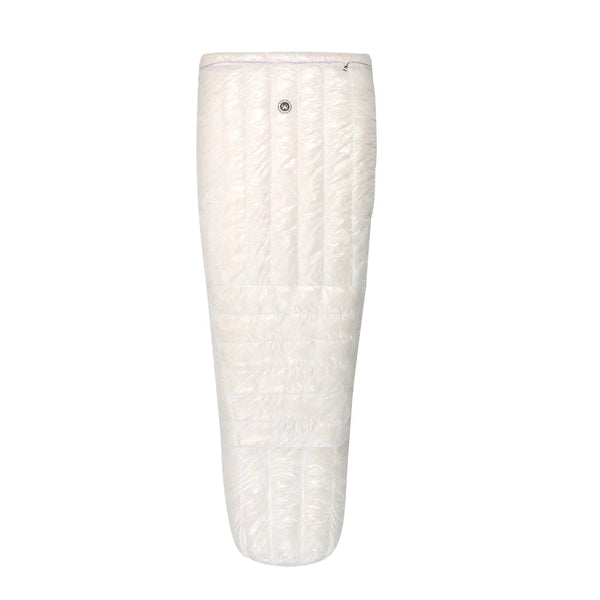
Quilt vs. sleeping bag: what is the concrete difference?

The distinction is primarily structural. An ultralight sleeping bag fully wraps the user with uniform 360° insulation. A quilt covers only the top and sides of the body, relying on the insulated sleeping pad to protect the back from cold via conduction. This system works particularly well when combined with a mattress with an R-value suited to the season—the mattress then becomes the bottom part of the insulation system.

In return, a quilt requires an adjustment period: managing drafts on the sides and the different freedom of movement compared to a mummy bag are points to master during the first few nights. Once mastered, the format offers significantly greater freedom in sleeping positions.

Filling and temperature range of quilts

The quilts available in our selection use high-density natural down filling (800 to 900 cuin), which allows them to achieve serious temperature ranges within a very small compressed volume. Compact down in a quilt format often fits into a 3 to 5-liter stuff sack—a decisive advantage for long-term bivouac sleeping bag routes where every liter counts.

  • Weight: between 300 g and 700 g depending on the temperature range and size
  • Compressed volume: generally less than 5 liters
  • Temperature range: from +5°C to -10°C comfort rating depending on the model
  • Width: ensure sufficient width to avoid side drafts—a point to check on each product page

For which profile and use?

The quilt is mainly aimed at experienced practitioners—ultralight hikers, long-distance trekkers, and fans of lightweight bivouacking—who have already optimized their sleep system and are looking to take an extra step in reducing the weight carried. It is also suitable for hot sleepers who find mummy bags too confining. For mixed outings or those who prefer the simplicity of a conventional bag, the trekking sleeping bag collection and the 0° sleeping bag collection offer lightweight and compressible models adapted to these needs.

Frequently asked questions

What is a bivouac quilt and how does it differ from a sleeping bag?

A quilt is a camping quilt that is open on the underside, without an integrated hood or back insulation. The principle is based on a simple observation: filling compressed under body weight loses most of its insulating power. A quilt therefore eliminates this useless material and delegates back insulation to the sleeping pad. The result: sleeping equipment that is significantly lighter and more compact than a conventional sleeping bag with equivalent thermal insulation.

Is a quilt warm enough for mountain bivouacking?

Yes, provided it is paired with a suitable insulated sleeping pad. The quilt covers the top and sides of the body—it is the pad that provides insulation against conductive cold from the ground. A pad with a sufficient R-value (generally 3 to 5 depending on the season) is essential for the system to work properly. High-density down-filled quilts (800 to 900 fill power) can reach comfort temperatures down to -10°C in a very compact format—performance comparable to the best ultralight sleeping bags.

Is the quilt suitable for all sleepers?

Not necessarily. Sleepers who move a lot at night may have difficulty keeping the quilt well-positioned, which creates side drafts and heat loss. Most models have straps or a retention system under the mattress to limit this problem. Those who get cold easily or who are looking for the simplicity of a closed system will often be more comfortable with a classic mummy sleeping bag. The quilt is primarily aimed at experienced practitioners who have already optimized their bivouac equipment.

What width should I choose for a backpacking quilt?

Width is an important criterion that is often underestimated. A quilt that is too narrow creates air gaps on the sides and reduces its thermal efficiency. Generally speaking, a width of 120 to 135 cm is suitable for most body types when sleeping on the back or side. Wider models (140 cm and above) offer more freedom of movement but are slightly heavier. The ideal width also depends on your build and sleeping habits — this information is specified on each product page.

How to maintain a natural down quilt?

Maintaining a down quilt follows the same rules as a down sleeping bag: machine wash at 30°C using a specific down detergent, and tumble dry at a low temperature with dryer balls to restore the feathers' loft. Storing it compressed for long periods degrades the fill power—it is recommended to store it uncompressed in a large bag between trips. Using a sleeping bag liner inside limits frequent washing and extends the lifespan of the down.