
0-degree sleeping bag
10 products
Un sac de couchage 0 degré est la référence polyvalente du trekking et du bivouac en France : il couvre l'essentiel des nuits en montagne du printemps à l'automne, supporte les altitudes jusqu'à 2 500 m et convient aux nuits fraîches estivales dans les Alpes et les Pyrénées. Duvet ultralight compact pour l'itinérance longue distance ou sac de couchage léger en garnissage synthétique pour les sorties humides — les données thermiques (confort, limite, extrême) sont mesurées selon la norme EN 13537 / ISO 23537 (quand disponibles) et précisées sur chaque fiche.
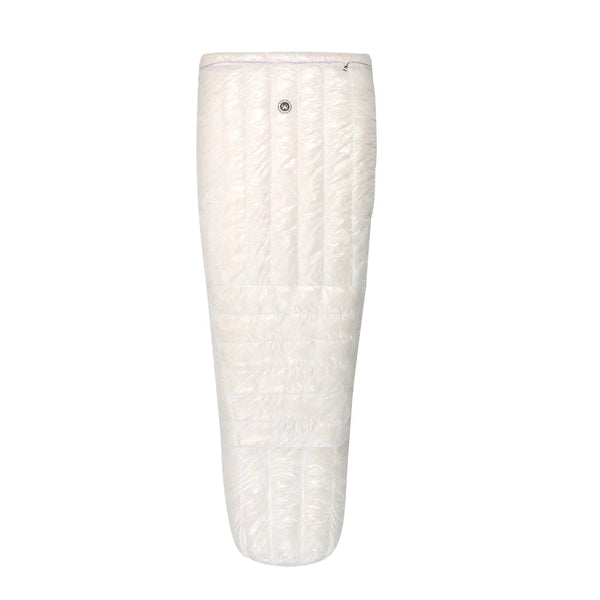


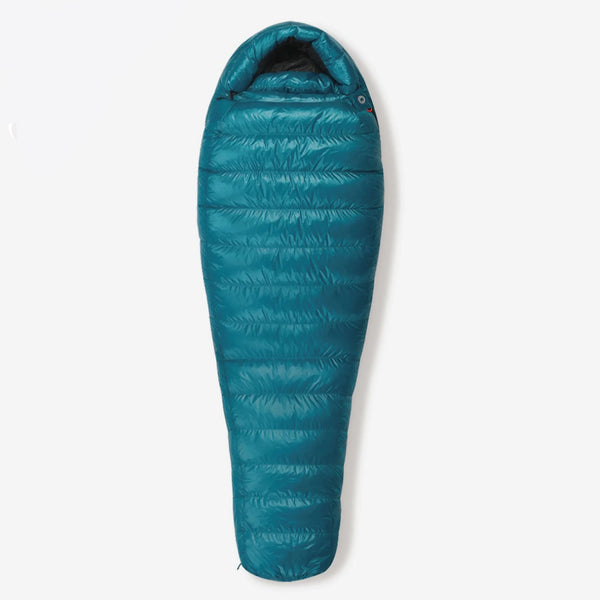
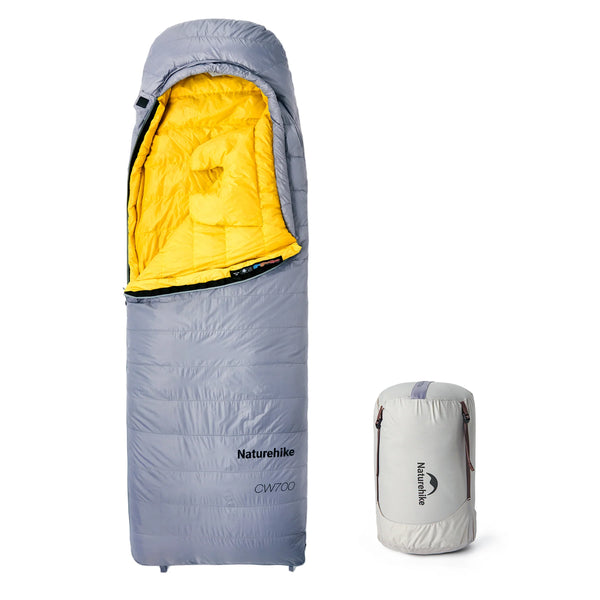
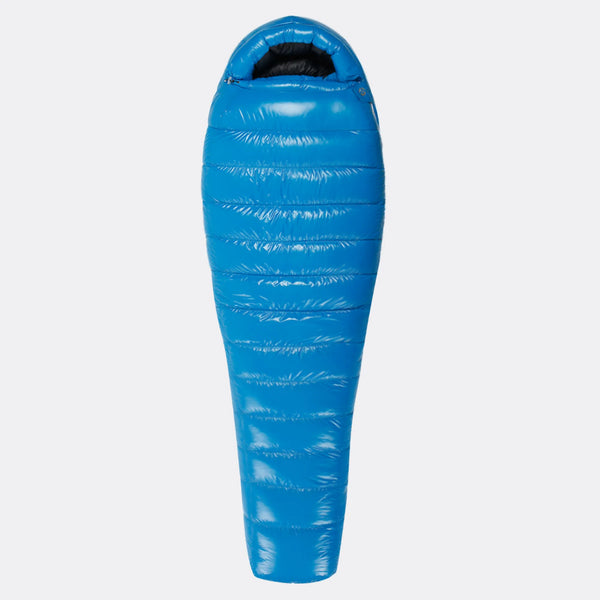
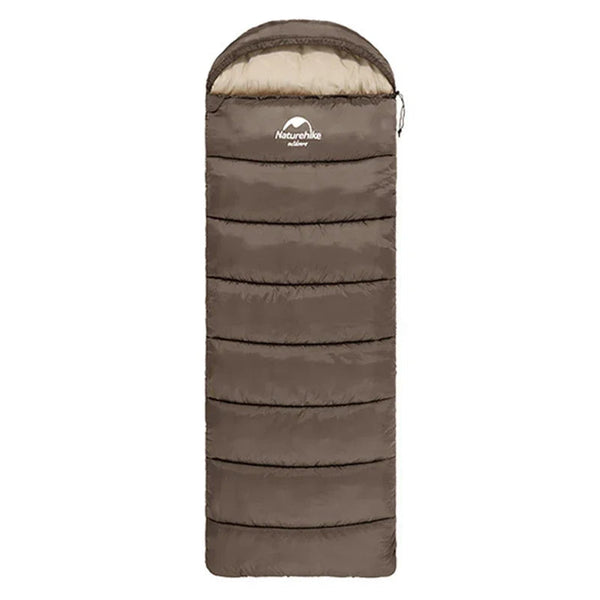
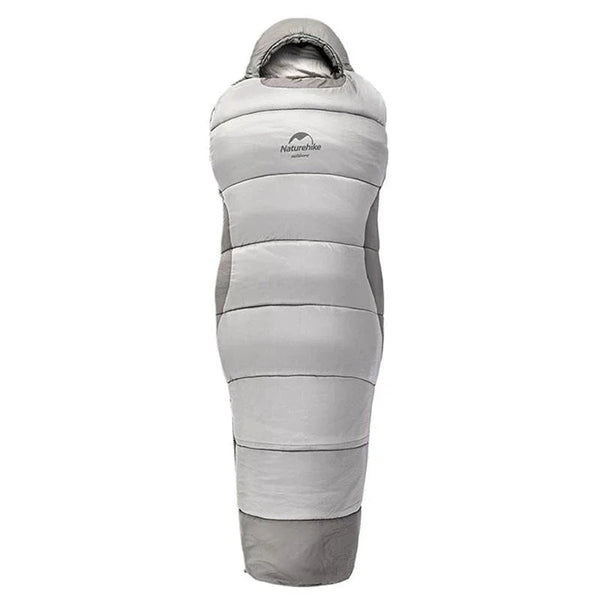
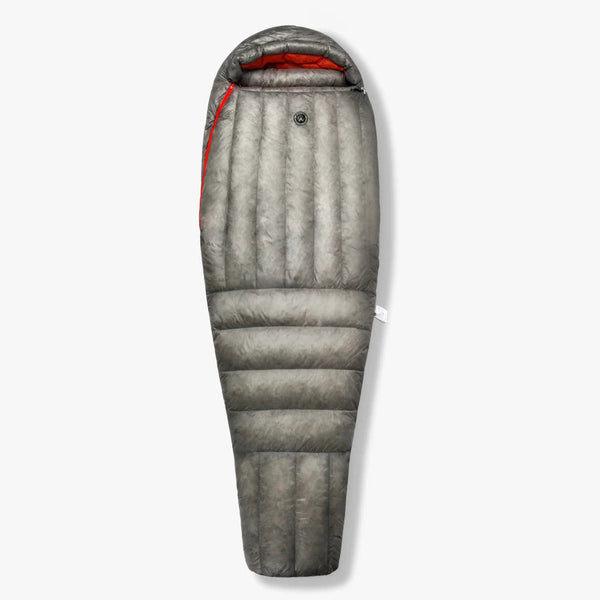
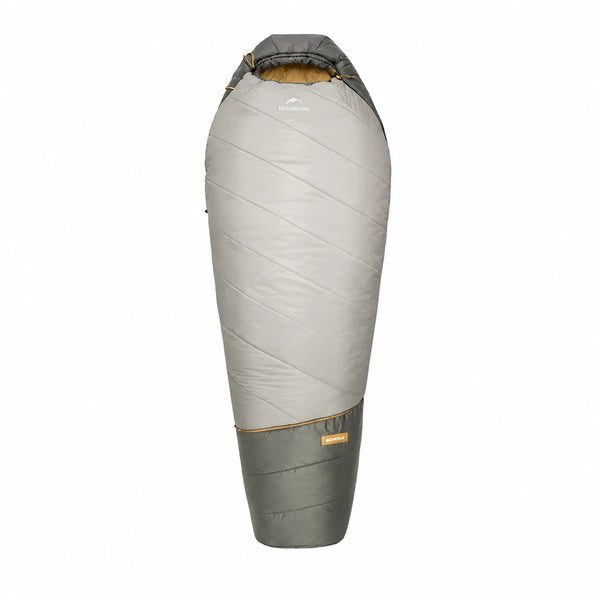
0-degree sleeping bag: what the comfort temperature means in real conditions
The comfort temperature of a 0-degree down sleeping bag indicates, according to the EN 13537 standard, the minimum temperature at which a standard sleeper can spend 8 hours without feeling cold—under standardized conditions: insulating mat (R-value ≥ 3), long thermal underwear, closed hood, dry environment. In real conditions—altitude, humidity, accumulated fatigue—it is recommended to allow a margin of 3 to 5 °C. A well-sized compact 0-degree sleeping bag offers a comfortable range of use between approximately 0 °C and +12 °C, making it the most versatile model for hiking and bivouac sleeping bags in mainland France. On the GR20 in July (nights at 5–10 °C between 1,500 and 2,000 m), a 0 °C comfort rating with an R-value 3 mat and thermal underwear is suitable for the vast majority of nights.
Weight and compressibility: concrete data for trekking
For trekking sleeping bags and long-distance roaming, weight and compressed volume are the determining criteria after the temperature range. An ultra-light sleeping bag with 800 cuin down at a 0 °C comfort rating weighs between 500 g and 700 g depending on the construction—an ultra-light 500 g sleeping bag is achievable with 850–900 cuin down on 10-denier fabric, but implies compromises on durability and the actual temperature range (exclusive summer use, comfort generally limited to +5 °C). For a versatile 3-season trekking sleeping bag, a model between 700 g and 1 kg with 650–800 cuin down represents the best balance of weight/insulation/durability. A compact down sleeping bag with 0 °C comfort compresses into 8 to 12 liters, compared to 16 to 20 liters for an equivalent synthetic—a significant difference in a 35 to 45-liter backpack.
Ultra-compact or ultra-light sleeping bag: what is the difference?
The two criteria are related but distinct. An ultra-compact sleeping bag prioritizes compressed volume—relevant for small-capacity backpacks or trips where space is limited. An ultra-light sleeping bag prioritizes total weight—relevant for long-distance treks where every gram counts over time. In practice, ultralight down models with high fill power (750–850 cuin) combine both: low weight and low compressed volume. Lightweight synthetic models meet the weight criterion but rarely the volume criterion—a synthetic compact 0-degree down bag is difficult to compress to under 14 liters. For hiking trips with significant carrying, down filling remains objectively superior on these two criteria.
Natural down or synthetic for an ultra-light trekking sleeping bag?
Trekking down with natural filling offers the best weight/insulation ratio for trips in dry conditions: an ultra-light trekking sleeping bag with 800 cuin down reaches 500 to 700 g compared to 1.1 to 1.4 kg for a synthetic one with equivalent thermal performance. Synthetic filling maintains its insulation even when damp—a real advantage in rainy conditions or when crossing humid areas. For a light, warm sleeping bag used in varied conditions, models with hydrophobic down combine both advantages: the lightness of natural down with partial moisture resistance. To learn more, consult the down vs. synthetic filling guide based on usage.
0-degree or 3-season sleeping bag: what is the difference for bivouacking?
An ultralight 0-degree sleeping bag and a 3-season model often cover the same uses—the distinction lies mainly in the construction and the temperature range covered. A light, compact 3-season sleeping bag incorporates a margin toward both positive and negative temperatures, with a construction adapted to significant variations between warm and cool nights over several weeks. For hikers who alternate spring, summer, and autumn outings with very varied conditions, the 3-season sleeping bag collection offers models specifically designed for this extended versatility. For those planning winter outings, the extreme cold sleeping bag collection will be suitable for very low temperatures.