


Hoodless quilt for lightweight trekking
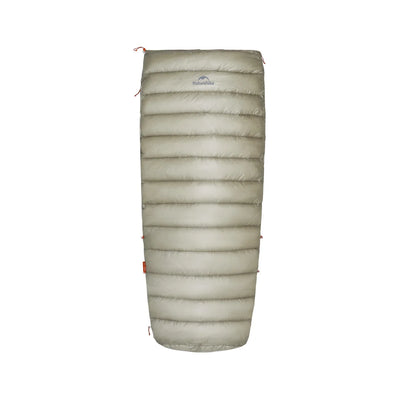
The Naturehike Cicada features an envelope quilt shape without an integrated hood: removing the hood and full side zipper reduces the total weight to 385g in size M, compared to 600-800g for a mummy bag with the same temperature rating. This design is suitable for sleepers who move little or who use a beanie and sleeping collar for added warmth. In summer, the open design frees the shoulders and feet for superior sleeping comfort.

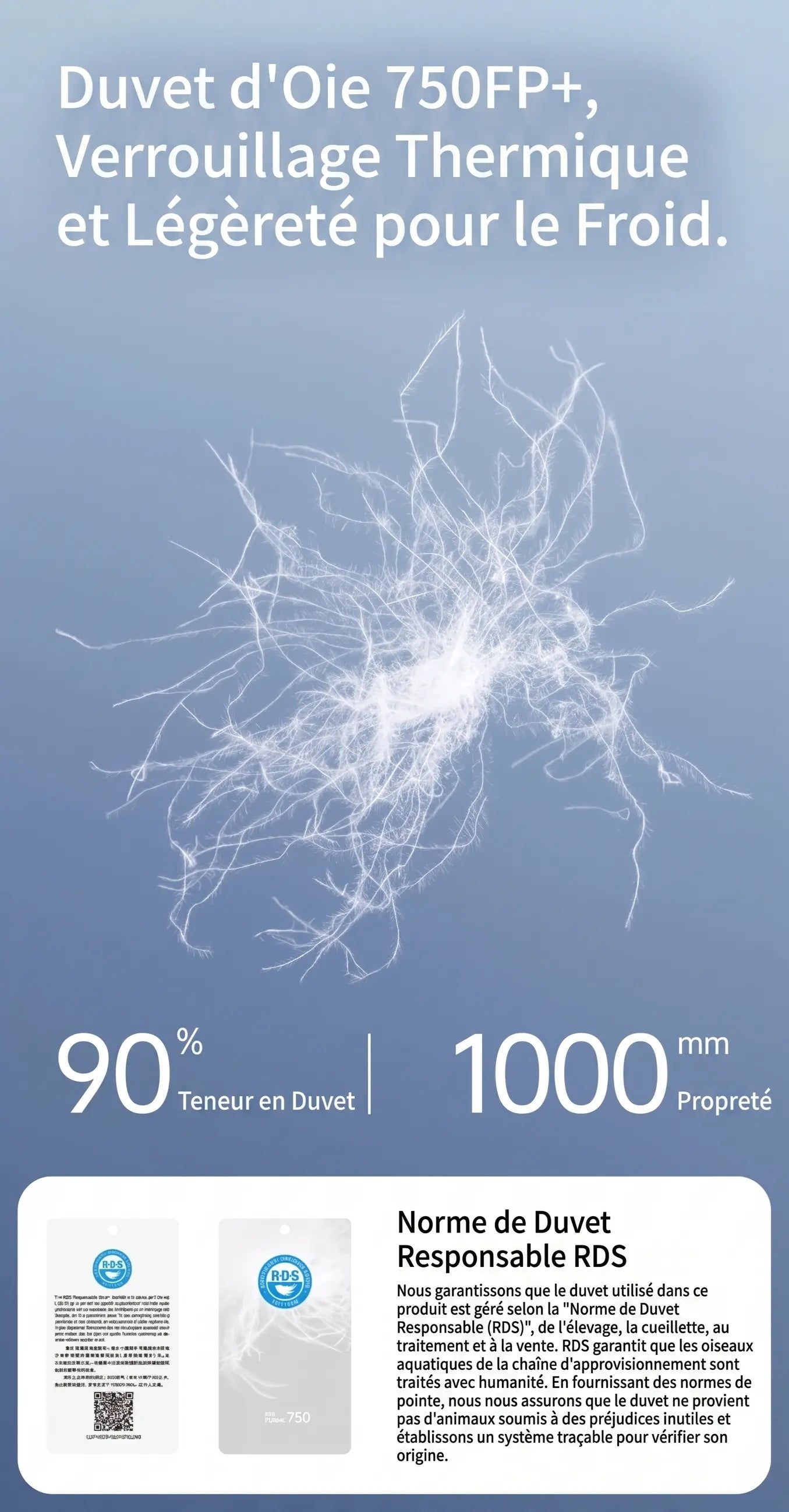
750 fill power RDS-certified down, 90% down
The 750 FP goose down fill, featuring 90% down and a certified cleanliness of 1000 mm, provides high loft for 200 g of fill in size M. The RDS (Responsible Down Standard) certification ensures the traceability of the down from the farm to processing, without the use of live-plucking or force-feeding practices. This level of certification is rare in quilts of this weight range.

GB/T 38426 certified temperature reading
Cicada temperatures are measured according to GB/T 38426 or ISO 23537 using an instrumented thermal mannequin under controlled conditions. The comfort rating of +10.5°C corresponds to a standard female user sleeping in a relaxed position. The limit of +6.4°C is the thermal equilibrium threshold for a male in a curled-up position. The extreme rating of -6.3°C is a theoretical survival threshold. In the field, a mattress with a good R-value is essential: the quilt alone does not compensate for heat loss to the ground.

Lightweight combined with compressibility
In size M, the Cicada packs down to 425 g in a volume of 13 x 23 cm, compatible with 20 to 30 L backpacking packs. Size L (495 g packed, 15 x 28 cm) covers heights up to 190 cm with 230 g of down for slightly reinforced insulation. For a summer trekking down sleeping bag certified for dry conditions, this weight/compactness/traceability ratio positions the Cicada among the most well-documented ultralight sleeping bags in the range.
If a full mummy wrap suits you better than a quilt, the Aegismax D2 covers the same 0°C range with 650 fill power duck down and box-baffle construction.


Why pay more for the same performance?
The Naturehike Cicada was compared with the Millet Light Down 11°. The finding is simple: you get equivalent technical features and warmth without paying the brand premium. Keep your budget for your next expedition.

Data checked against the brands' official product pages — subject to change.

Doubt about which bag is right for you?
The field guide helps you choose based on skill level, temperature, needs, and weight. Support answers specific questions.
Find my bag Contact supportFrequently Asked Questions
The Naturehike Cicada has a comfort temperature of 10.5°C and a lower limit temperature of 6.4°C, measured to the GB/T 38426 / ISO 23537 standard. These values apply under standard conditions: sleeper in thermal base layers, on an insulated sleeping mat. It is designed for ultralight trekking, summer bivouac, thermal liner use (summer / mid-season).
The Naturehike Cicada is filled with 750 fill power goose down, 90% down, RDS certified. Down offers the best warmth-to-weight ratio: it packs down small and weighs less than synthetic insulation of equivalent warmth, which makes it the natural choice for wild camping and multi-day trekking. On the other hand, it loses efficiency when damp and needs careful drying. The Naturehike Cicada weighs 385 g, which places it in the ultralight category.
A 3-season sleeping bag is designed for spring, summer and autumn. Its comfort temperature sits between 0°C and +5°C, which covers most wild camps in France up to 2,500 m outside winter conditions. In winter or above 2,500 m, a dedicated cold-weather bag is needed.
A 3-season bag is suited to night-time temperatures between roughly 0°C and +15°C. Below 0°C, thermal comfort is no longer assured without extra equipment (liner, additional sleepwear). Above +15°C, most sleepers will find the bag too warm: venting through the foot zip helps regulate.
For the vast majority of walkers and trekkers in France (GR20, GR5, Tour du Mont Blanc from June to September), a 3-season bag with a 0°C comfort rating is sufficient. A 4-season bag is only needed above 3,000 m outside summer, in winter conditions, or for exposed high-altitude wild camps in autumn.