


Expedition sleeping system for winter trekking
The Aegismax G3 is an essential piece of gear for those facing sustained sub-zero temperatures. When the thermometer drops below -5°C, a winter sleeping bag becomes the most critical safety item in your kit. This model ensures full physiological recovery by drastically reducing body heat loss, allowing you to set off again clear-headed and well-rested the next day.

Strict compartmentalization and maintenance of the loft
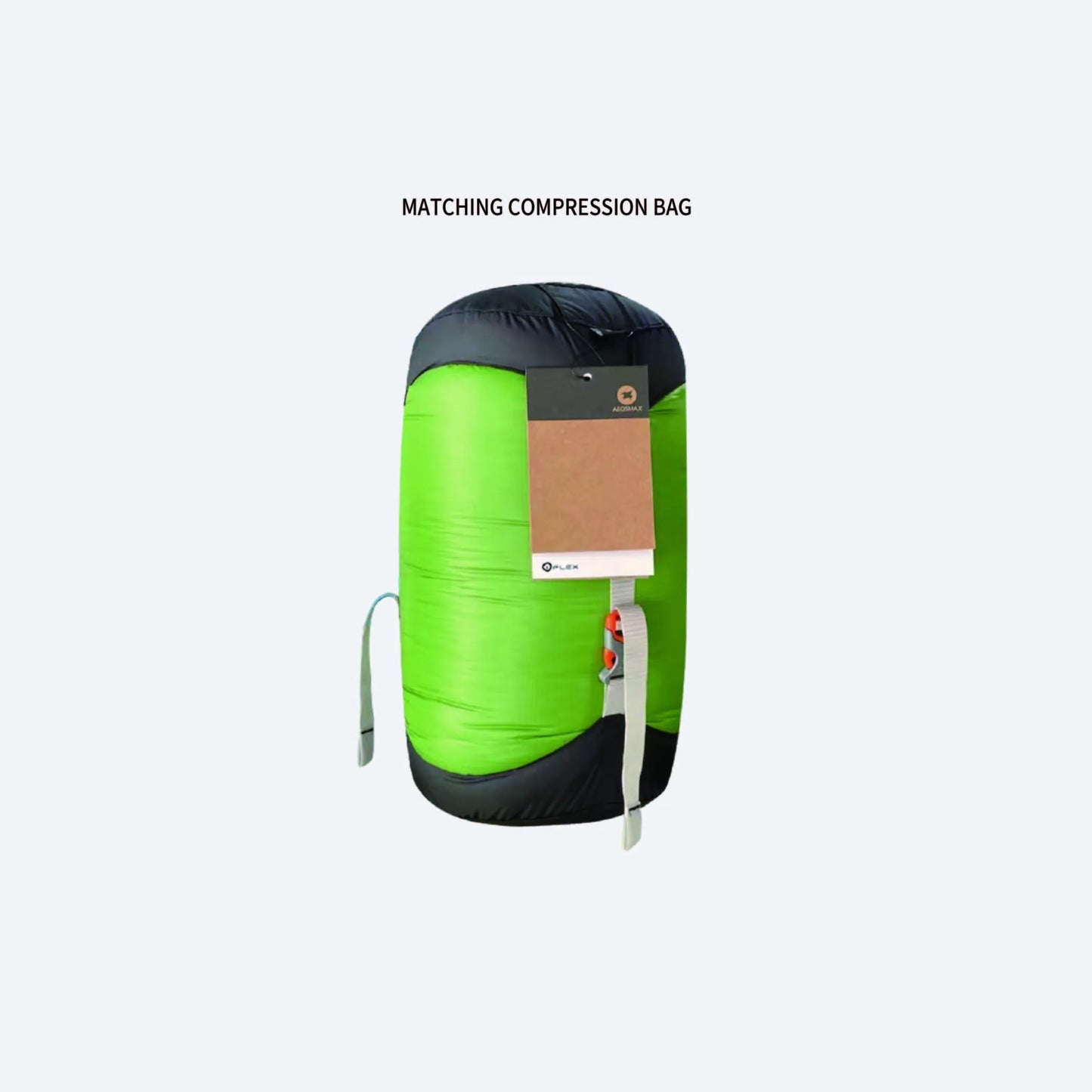
The thermal performance of this bag relies on its RDS-certified 800-fill power goose down, stabilized by a complex box-wall construction. This engineering prevents the insulating material from shifting to the bottom of the bag, ensuring consistent thickness across the torso and legs. Despite its ability to insulate down to -8°C, the IFlex® 15D fabric allows for an astonishing 4.5-liter compression, preserving the balance of your pack.
In the event that you are setting up a fixed base camp or a motorized bivouac with no weight constraints, where moisture-tolerant synthetic insulation is preferred, the robust alternative of the Naturehike MJ600 deserves your attention.



Doubt about which bag is right for you?
The field guide helps you choose based on skill level, temperature, needs, and weight. Support answers specific questions.
Find my bag Contact supportFrequently Asked Questions
The Aegismax G3 has a comfort temperature of -8°C and a lower limit temperature of -15°C, measured to the EN 13537 standard. These values apply under standard conditions: sleeper in thermal base layers, on an insulated sleeping mat. It is designed for winter bivouac use (4 seasons).
The Aegismax G3 is filled with 800 fill power, RDS certified. The Aegismax G3 weighs 1350 g, which places it in the standard category.
A down sleeping bag is insulated with goose or duck down and feathers, whereas a synthetic bag uses polyester fibres. Down offers a better warmth-to-weight ratio and packs smaller than synthetic insulation of equivalent warmth; synthetic keeps more of its insulation when damp.
A well-maintained down sleeping bag retains 80 to 90% of its insulating properties after 5 to 10 years of regular use. The main cause of degradation is long-term compressed storage, which gradually breaks the down clusters. Washing once a year with a down-specific detergent and storing the bag uncompressed out of season significantly extend the life of the fill.
The ideal comfort rating depends on intended use. For summer trekking in France (Alps, Pyrenees, GR20), a comfort temperature between 0°C and +3°C covers almost all situations. For static summer camping in the lowlands, +5°C to +10°C is enough. For extreme cold or winter wild camping in the mountains, aim for -10°C comfort minimum. The comfort temperature is always measured to EN 13537 / ISO 23537-1 / GB/T 38426.