


Hoodless trekking sleeping bag: real-world usage and conditions
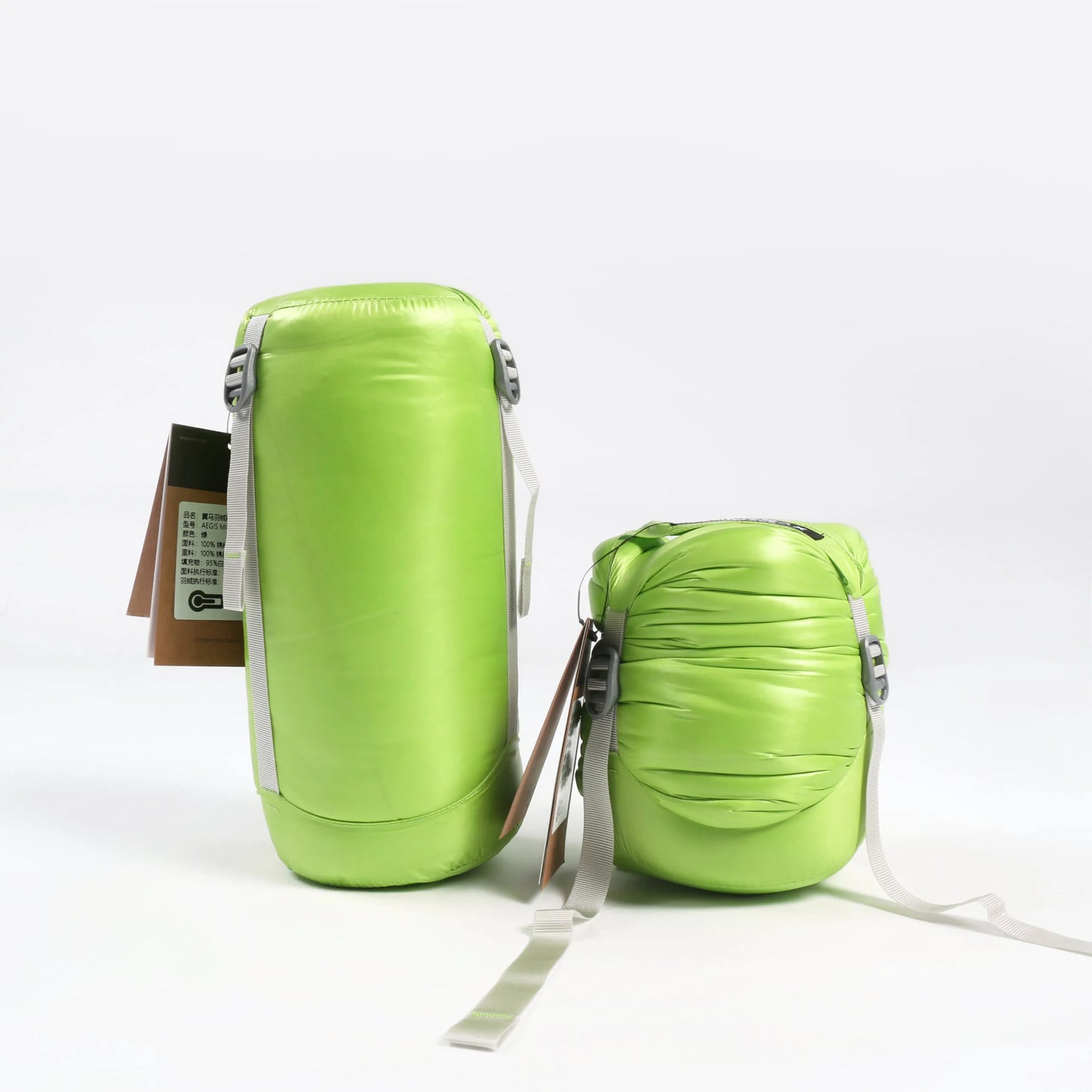
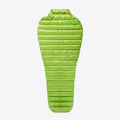
The Aegismax Mini trekking sleeping bag is designed without a hood, a design choice that reduces the weight to 440g (Regular) and the compressed volume to 20 × 12 cm. This format is ideal for summer outings where the night-time temperature remains around 10-15°C and where portability takes precedence over thermal margin. It is not suitable for nights below 6°C (limit temperature) without additional clothing.

800-fill power down: what it actually means
The RDS-certified 800-fill power white goose down indicates the loft of the insulation: each ounce of down occupies 800 cubic inches when lofted. For an equivalent weight, 800-fill power down provides more insulation than 650-fill and compresses into a smaller volume. The 20D iFlex® nylon shell with DWR treatment offers light resistance to morning dew, without guaranteeing waterproofing in prolonged rain. For users who want the same compressibility with an integrated hood and an expanded temperature range with a comfort rating of 7°C, the Aegismax Leto is the model to compare.
Drawstring at the neck: thermal management without a hood
The lack of a hood on the Aegismax MINI is compensated for by a drawstring at the collar, the only closure point around the head and neck. This system limits heat loss around the neck without adding the weight of a full hood, but it requires manual adjustment every time you wake up at night, unlike a hood that stays in place on its own. For an ultralight sleeping bag used with a beanie or a buff, this compromise remains logical: head warmth is managed by a separate garment rather than by the bag itself.
20 x 12 cm compressed: the benchmark for ultra-light compactness
With a compressed volume of 20 x 12 cm, the Aegismax MINI ranks among the benchmarks for ultra-compact sleeping bags with natural down fill. This level of compactness frees up significant space in a lightweight hiking backpack or bike pannier, without resorting to synthetic fill, which is less insulating for the same weight. For a lightweight, compact sleeping bag intended for summer trekking or cycle touring, this format allows you to carry an additional liner or emergency blanket without exceeding the volume originally allocated for sleeping gear.
For practitioners who want the same compressibility with an integrated hood and an expanded thermal range to 7°C comfort, the Aegismax Leto is the model to compare.



Doubt about which bag is right for you?
The field guide helps you choose based on skill level, temperature, needs, and weight. Support answers specific questions.
Find my bag Contact supportFrequently Asked Questions
The Aegismax MINI has a comfort temperature of 11°C and a lower limit temperature of 6°C, measured to the ISO 23537 standard. These values apply under standard conditions: sleeper in thermal base layers, on an insulated sleeping mat. It is designed for hiking, trekking use (Summer).
The Aegismax MINI is filled with 800 fill power, RDS certified. The Aegismax MINI weighs 440 g, which places it in the ultralight category.
A down sleeping bag is insulated with goose or duck down and feathers, whereas a synthetic bag uses polyester fibres. Down offers a better warmth-to-weight ratio and packs smaller than synthetic insulation of equivalent warmth; synthetic keeps more of its insulation when damp.
A well-maintained down sleeping bag retains 80 to 90% of its insulating properties after 5 to 10 years of regular use. The main cause of degradation is long-term compressed storage, which gradually breaks the down clusters. Washing once a year with a down-specific detergent and storing the bag uncompressed out of season significantly extend the life of the fill.
The ideal comfort rating depends on intended use. For summer trekking in France (Alps, Pyrenees, GR20), a comfort temperature between 0°C and +3°C covers almost all situations. For static summer camping in the lowlands, +5°C to +10°C is enough. For extreme cold or winter wild camping in the mountains, aim for -10°C comfort minimum. The comfort temperature is always measured to EN 13537 / ISO 23537-1 / GB/T 38426.