


800 cuin goose down trekking sleeping bag: 840 g when every kilo counts over long distances
At the end of a day spent around 1,800 m, your backpack weighs heavy on your shoulders, and the night ahead calls for a warm sleeping bag weighing no more than a kilogram. The Aegismax M3 is an 840 g goose-down trekking sleeping bag in Regular size, with a comfort rating of 0°C. Laboratory rating, with a suitable sleeping pad and dry base layers: the -5°C lower limit provides a safety margin if the night is colder than expected.

Full baffles, 3D cut and zip baffle: an ultra-light sleeping bag with no cold spots
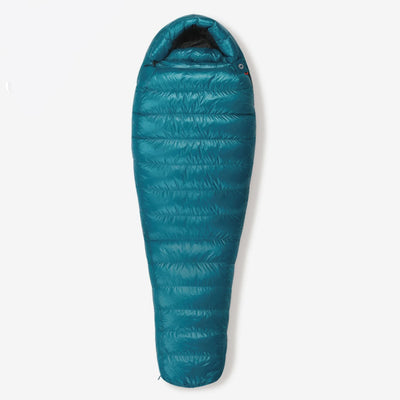
A cold night often starts with a weak point: down that shifts and leaves a thin area at the shoulders or hips. On this ultralight sleeping bag, the full-box construction distributes the down evenly and limits cold spots. The outer fabric and liner are cut to different sizes, with 3D side walls that allow the down to loft. The baffle along the zip and the pinch-free closure system seal off one of the most common air passages. The iFlex 15D DWR fabric repels light moisture, without being equivalent to a waterproof shelter.

500 g of 90% RDS-certified goose down, GB/T 18401 Class A tested fabric: read the specifications for a down sleeping bag
On the forums, the same question comes up: how much down, and of what quality? This down sleeping bag contains 500 g of 800 cuin white goose down (550 g in Lengthen), 90% down, RDS certified. The fill weight is just as important as the total weight for understanding the actual insulation. The outer fabric is tested according to GB/T 18401, Class A: the strictest level of the Chinese textile safety standard, applicable to products in prolonged contact with the skin. The iFlex 15D SoftTouch lining is soft to the touch.

Compression 18 × 25 cm, 4-chamber hood, self-sealing vent: lightweight in the bag, adjustable at night
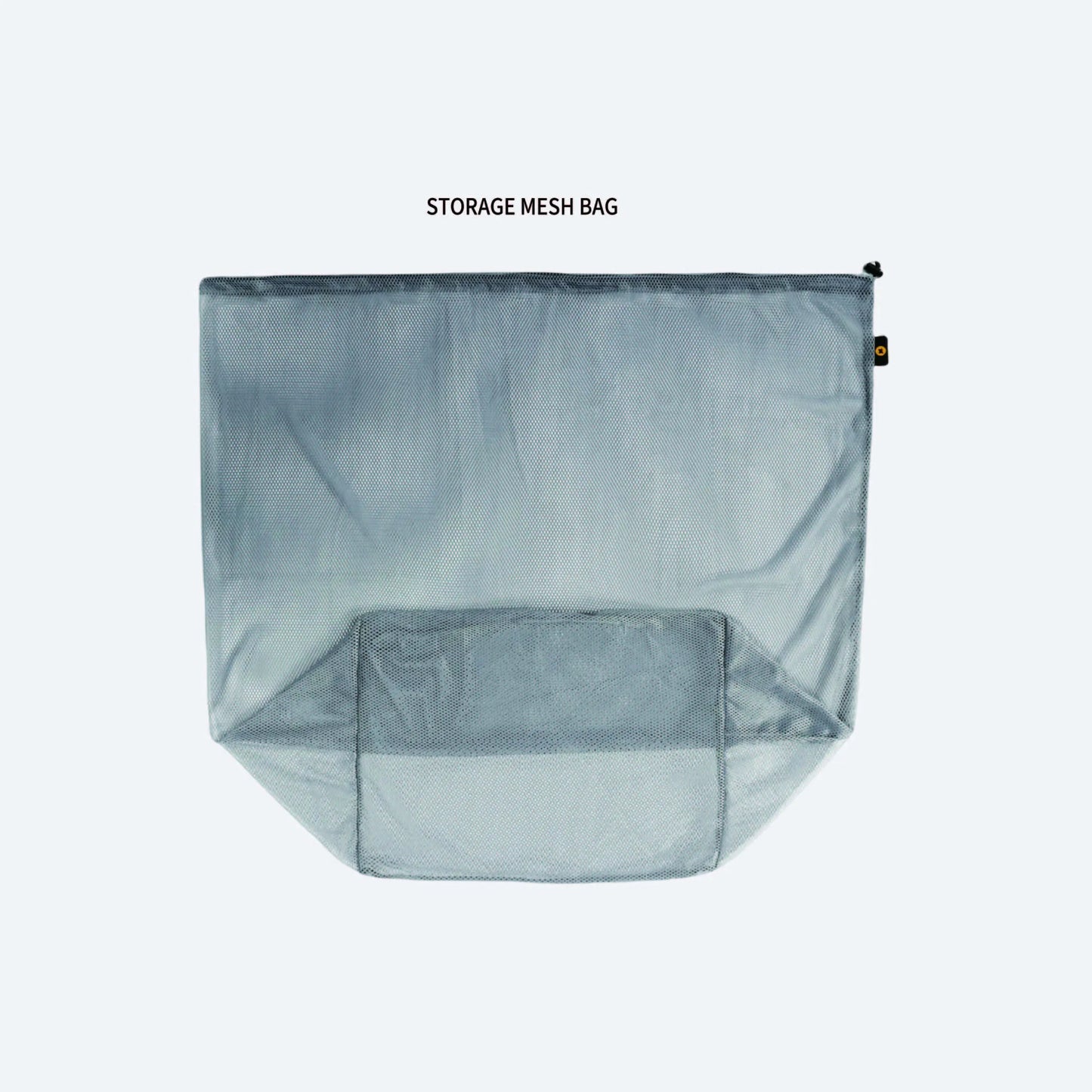
The ultralight compression sack reduces the M3 to 18 × 25 cm in both Regular and Lengthen, while a mesh bag provides storage between outings when the down is decompressed. At night, the 4-chamber hood maintains an even loft around the head, with two adjustment cords to limit heat loss. The 3D footbox follows the natural position of the foot, and the self-sealing vent releases excess heat without opening the entire bag. A YKK#5 two-way zip, an internal zippered pocket, and a hidden pocket complete the design. Regular and Lengthen versions from the same series can be zipped together.
For a tighter budget, the Aegismax D2 (duck down, 0 °C) is another option.


Why pay more for the same performance?
The Aegismax M3 was compared with the Valandré Swing Co 450. The finding is simple: you get equivalent technical features and warmth without paying the brand premium. Keep your budget for your next expedition.

Data checked against the brands' official product pages — subject to change.

Doubt about which bag is right for you?
The field guide helps you choose based on skill level, temperature, needs, and weight. Support answers specific questions.
Find my bag Contact supportFrequently Asked Questions
The Aegismax M3 has a comfort temperature of 0°C and a lower limit temperature of -5°C, measured to the ISO 23537 standard. These values apply under standard conditions: sleeper in thermal base layers, on an insulated sleeping mat. It is designed for hiking, bivouacking, trekking use (3 seasons).
The Aegismax M3 is filled with 90% white goose down, 800 fill power, RDS certified (500 g in Regular). Down offers the best warmth-to-weight ratio: it packs down small and weighs less than synthetic insulation of equivalent warmth, which makes it the natural choice for wild camping and multi-day trekking. On the other hand, it loses efficiency when damp and needs careful drying. The Aegismax M3 weighs 840 g, which places it in the lightweight category.
The lower limit temperature is the lowest temperature at which a reference man can maintain his body heat curled up, according to EN 13537 / ISO 23537-1. It does not correspond to comfortable use: below the limit temperature, the sleeper is likely to suffer from the cold. For real use, the comfort temperature is the main reference.
The minimum recommended temperature is the bag's comfort temperature, measured to EN 13537 / ISO 23537-1. For a 0°C bag, this means a standard sleeper can spend a night without feeling cold at 0°C, provided they use an insulated sleeping mat (minimum R-value of 2 to 3) and wear thermal base layers.
For extreme cold (below -10°C), the most suitable bags combine high-loft down (700 cuin minimum, ideally 800 cuin and above) with a mummy cut that limits heat loss. A sleeping mat with an R-value of at least 4 is essential alongside. For nights between 0°C and -5°C, a good-quality 3-season bag with a 0°C comfort rating is generally sufficient.