


Robust thermal protection for demanding treks
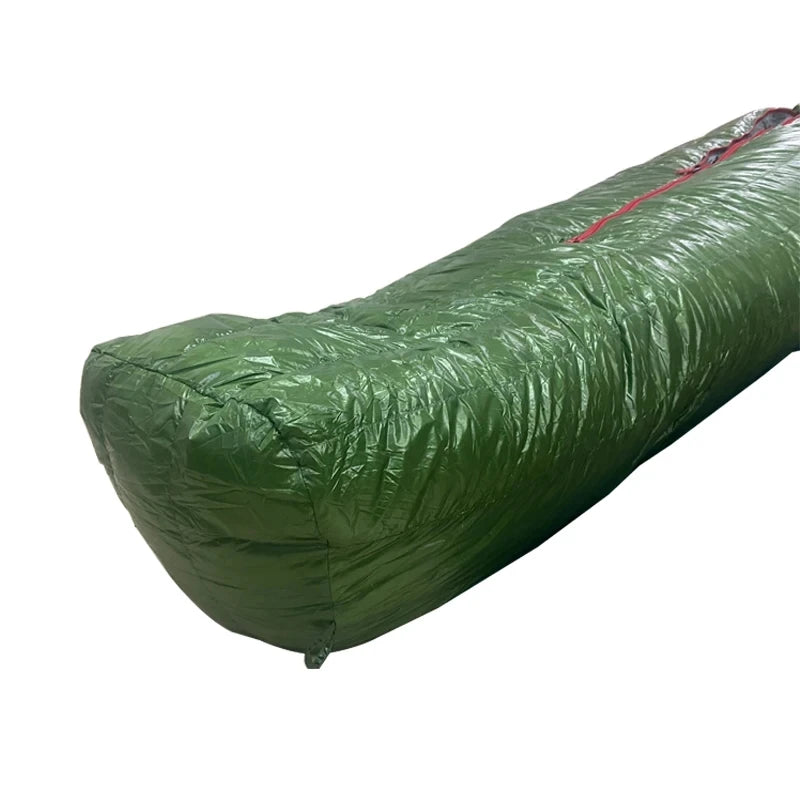
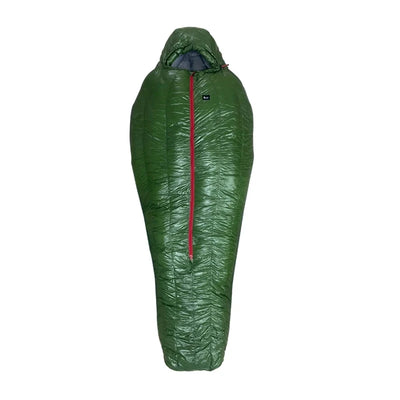
The Flame's Creed 20D is structured to face real-world terrain conditions without the extra cost of fragility. This 0-degree sleeping bag prioritizes mechanical resistance and thermal reliability. The -10°C limit indicates an extreme safety threshold, with the 0°C comfort temperature remaining the reference value for use. The performance of this filling will depend directly on your ground insulation and the absence of drafts in the tent.

Abrasion resistance and thermal stability
The 20D nylon outer fabric withstands friction against rocky ground or surrounding gear better than ultra-light models, reducing the risk of tearing. The 700-fill duck down offers a highly relevant insulation-to-volume ratio for regular use. The smooth zippers and internal draft collar block cold air entry with great technical precision.
If your nights are mostly spent at a static campsite or in a van where weight is not an issue, and you prefer the moisture resistance of a rectangular synthetic fill, the Naturehike U250S will be the ideal piece of equipment for maximum spatial and thermal comfort.


Why pay more for the same performance?
The FLAME'S CREED 20D was compared with the Millet Light Down. The finding is simple: you get equivalent technical features and warmth without paying the brand premium. Keep your budget for your next expedition.

Data checked against the brands' official product pages — subject to change.

Doubt about which bag is right for you?
The field guide helps you choose based on skill level, temperature, needs, and weight. Support answers specific questions.
Find my bag Contact supportFrequently Asked Questions
The FLAME'S CREED 20D has a comfort temperature of 0°C and a lower limit temperature of -10°C. These values apply under standard conditions: sleeper in thermal base layers, on an insulated sleeping mat. It is designed for hiking, bivouacking, vanlife use (3 seasons).
The FLAME'S CREED 20D is filled with 700 cuin. The FLAME'S CREED 20D weighs 1050 g, which places it in the lightweight category.
The lower limit temperature is the lowest temperature at which a reference man can maintain his body heat curled up, according to EN 13537 / ISO 23537-1. It does not correspond to comfortable use: below the limit temperature, the sleeper is likely to suffer from the cold. For real use, the comfort temperature is the main reference.
The minimum recommended temperature is the bag's comfort temperature, measured to EN 13537 / ISO 23537-1. For a 0°C bag, this means a standard sleeper can spend a night without feeling cold at 0°C, provided they use an insulated sleeping mat (minimum R-value of 2 to 3) and wear thermal base layers.
For extreme cold (below -10°C), the most suitable bags combine high-loft down (700 cuin minimum, ideally 800 cuin and above) with a mummy cut that limits heat loss. A sleeping mat with an R-value of at least 4 is essential alongside. For nights between 0°C and -5°C, a good-quality 3-season bag with a 0°C comfort rating is generally sufficient.