


Rectangular sleeping bag for camping and vanlife
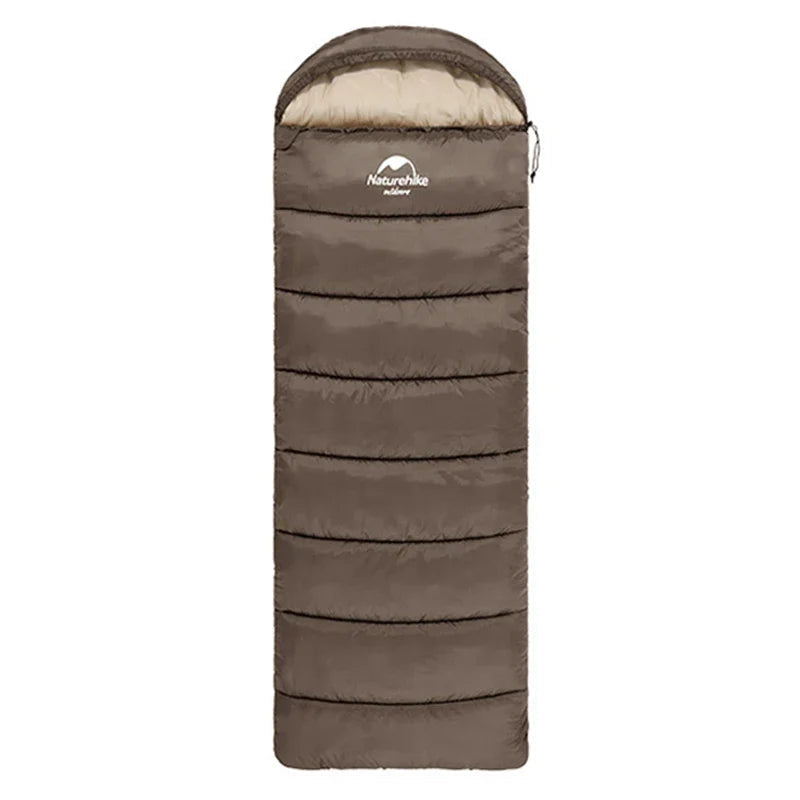
The Naturehike U250S 0-degree sleeping bag is designed for those who prioritize space and nocturnal comfort during their outings. Unlike restrictive mummy cuts, its rectangular shape allows for free leg movement during the night. Its cotton filling provides soft, even warmth, which is particularly resilient to the ambient humidity often encountered in a tent or converted van.
Modularity and thermal insulation
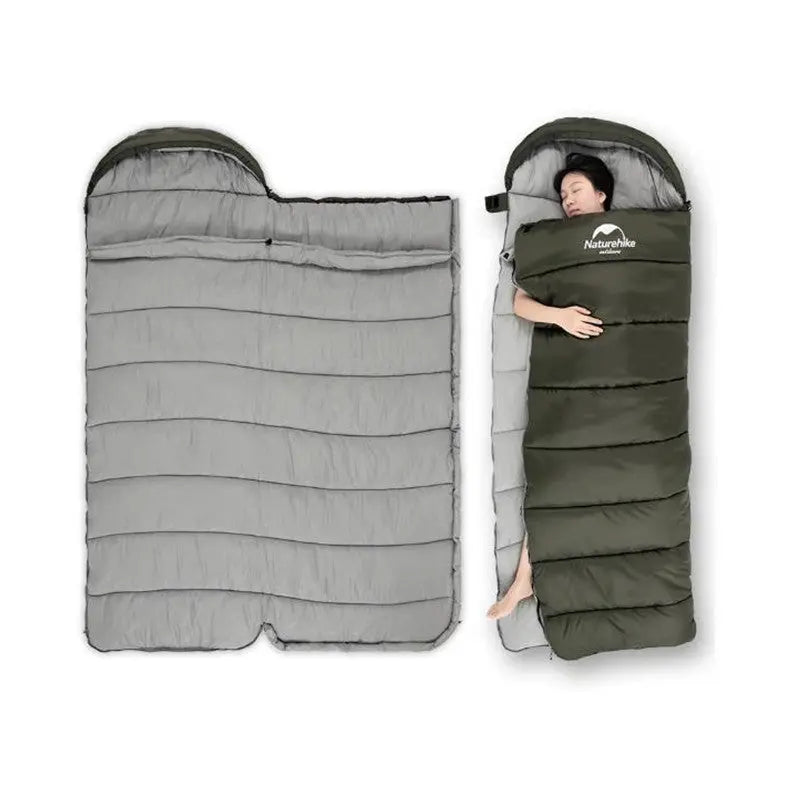
Designed for organized bivouacking and mid-season nights, this warm sleeping bag features a full-length zipper that allows it to be opened completely like a quilt. The joinable system offers the possibility of connecting two bags to create a double bed. It is a reliable solution for campers looking for a comfortable sleeping bag that is easy to care for, with no technical constraints.
For hikers who, on the contrary, want to halve the weight of their sleeping gear for summer trekking while maintaining protective insulation, the natural compact down of the Aegismax D1 will mark a real turning point in lightening your backpack.

Doubt about which bag is right for you?
The field guide helps you choose based on skill level, temperature, needs, and weight. Support answers specific questions.
Find my bag Contact supportFrequently Asked Questions
The Naturehike U250S has a comfort temperature of 0°C and a lower limit temperature of -3°C, measured to the ISO 23537 / GB/T 38426-2019 standard. These values apply under standard conditions: sleeper in thermal base layers, on an insulated sleeping mat. It is designed for hiking, bivouacking, camping, vanlife use (3 seasons).
The Naturehike U250S is filled with synthetic cotton. Synthetic insulation keeps insulating when damp, dries quickly and needs no special care — suited to changeable conditions or family trips. The Naturehike U250S weighs 1500 g, which places it in the standard category.
The lower limit temperature is the lowest temperature at which a reference man can maintain his body heat curled up, according to EN 13537 / ISO 23537-1. It does not correspond to comfortable use: below the limit temperature, the sleeper is likely to suffer from the cold. For real use, the comfort temperature is the main reference.
The minimum recommended temperature is the bag's comfort temperature, measured to EN 13537 / ISO 23537-1. For a 0°C bag, this means a standard sleeper can spend a night without feeling cold at 0°C, provided they use an insulated sleeping mat (minimum R-value of 2 to 3) and wear thermal base layers.
For extreme cold (below -10°C), the most suitable bags combine high-loft down (700 cuin minimum, ideally 800 cuin and above) with a mummy cut that limits heat loss. A sleeping mat with an R-value of at least 4 is essential alongside. For nights between 0°C and -5°C, a good-quality 3-season bag with a 0°C comfort rating is generally sufficient.