


Just one sleeping bag for the first bivouac: comfort 0°C, limit −5°C
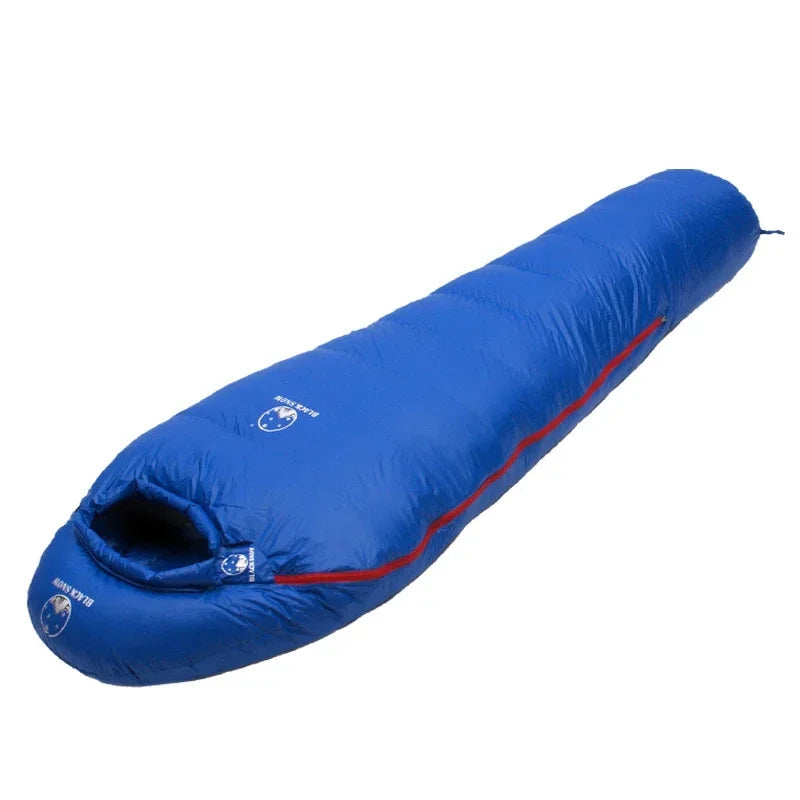
For an initial setup, a single 3-season sleeping bag should cover cool spring and autumn nights and summer high-altitude bivouacs. Blacksnow rates it for comfort at 0°C and comfort limit at −5°C. The compromise is clear: heavier than an ultralight model, and warmer than necessary for mild summer nights at lower altitudes.

800 cuin goose down: 700 g of fill for a total of 1,150 g
800-fill-power goose down provides loft: 700 g of fill in a 1,150 g sleeping bag. The more the fill expands, the more air it traps and the better it insulates. The stated temperature range remains a guideline: the sleeping pad, moisture, and clothing worn can affect how warm you feel, and the lower limit of −5°C does not indicate a comfort zone.

Anatomical footbox: foot comfort without compressing the down
The anatomical footbox follows the natural position of the foot and prevents the padding from being compressed in this area, which preserves the loft around the feet. For a bivouac sleeping bag used night after night, this detail prevents excessive stress on the down. The maximum recommended height is 185 cm.

Water-repellent 20D ripstop nylon: durability for the first outings
The 400T 20D ripstop nylon is water-repellent: it handles morning dew, without guaranteeing waterproofness in prolonged rain. Its weave limits the spread of a tear, an advantage when the bag rubs against rocks or the tent. For a multi-day trekking sleeping bag, a waterproof storage bag is still recommended.
If you want to reduce the weight of your sleeping bag to 509 g over the same 0°C range by removing the upper section, the Aegismax Wind Hard Twilight quilt is the format to consider.
Why pay more for the same performance?
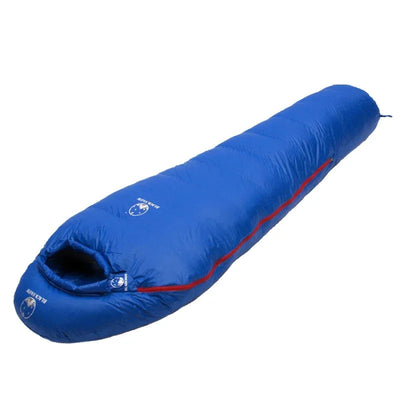
The Blacksnow was compared with the Decathlon Forclaz MT900. The finding is simple: you get equivalent technical features and warmth without paying the brand premium. Keep your budget for your next expedition.

Data checked against the brands' official product pages — subject to change.

Doubt about which bag is right for you?
The field guide helps you choose based on skill level, temperature, needs, and weight. Support answers specific questions.
Find my bag Contact supportFrequently Asked Questions
The Blacksnow has a comfort temperature of 0°C and a lower limit temperature of -5°C. These values apply under standard conditions: sleeper in thermal base layers, on an insulated sleeping mat. It is designed for hiking, bivouacking use (3 seasons).
The Blacksnow is filled with 800 cuin. The Blacksnow weighs 1150 g, which places it in the lightweight category.
A 3-season sleeping bag is designed for spring, summer and autumn. Its comfort temperature sits between 0°C and +5°C, which covers most wild camps in France up to 2,500 m outside winter conditions. In winter or above 2,500 m, a dedicated cold-weather bag is needed.
A 3-season bag is suited to night-time temperatures between roughly 0°C and +15°C. Below 0°C, thermal comfort is no longer assured without extra equipment (liner, additional sleepwear). Above +15°C, most sleepers will find the bag too warm: venting through the foot zip helps regulate.
For the vast majority of walkers and trekkers in France (GR20, GR5, Tour du Mont Blanc from June to September), a 3-season bag with a 0°C comfort rating is sufficient. A 4-season bag is only needed above 3,000 m outside summer, in winter conditions, or for exposed high-altitude wild camps in autumn.