


Extreme cold sleeping bag for mountaineering: -30°C comfort rating, -38°C limit rating
At a bivouac site at 3,500 m in the Alps, the wind drops at night, and the thermometer falls below -20°C: at this altitude, the choice of sleeping bag comes down to extreme cold. The Aegismax Ultra is an extreme cold sleeping bag with 950-fill-power grey goose down, rated for -30°C comfort. This is a laboratory rating; with an insulated sleeping pad (R-value 5 or higher), the -38°C lower limit provides a safety margin if the night is colder than expected. It is designed for mountaineering and committed bivouacs.

3D baffles, draft tube cover and two-way zipper: reduce cold spots
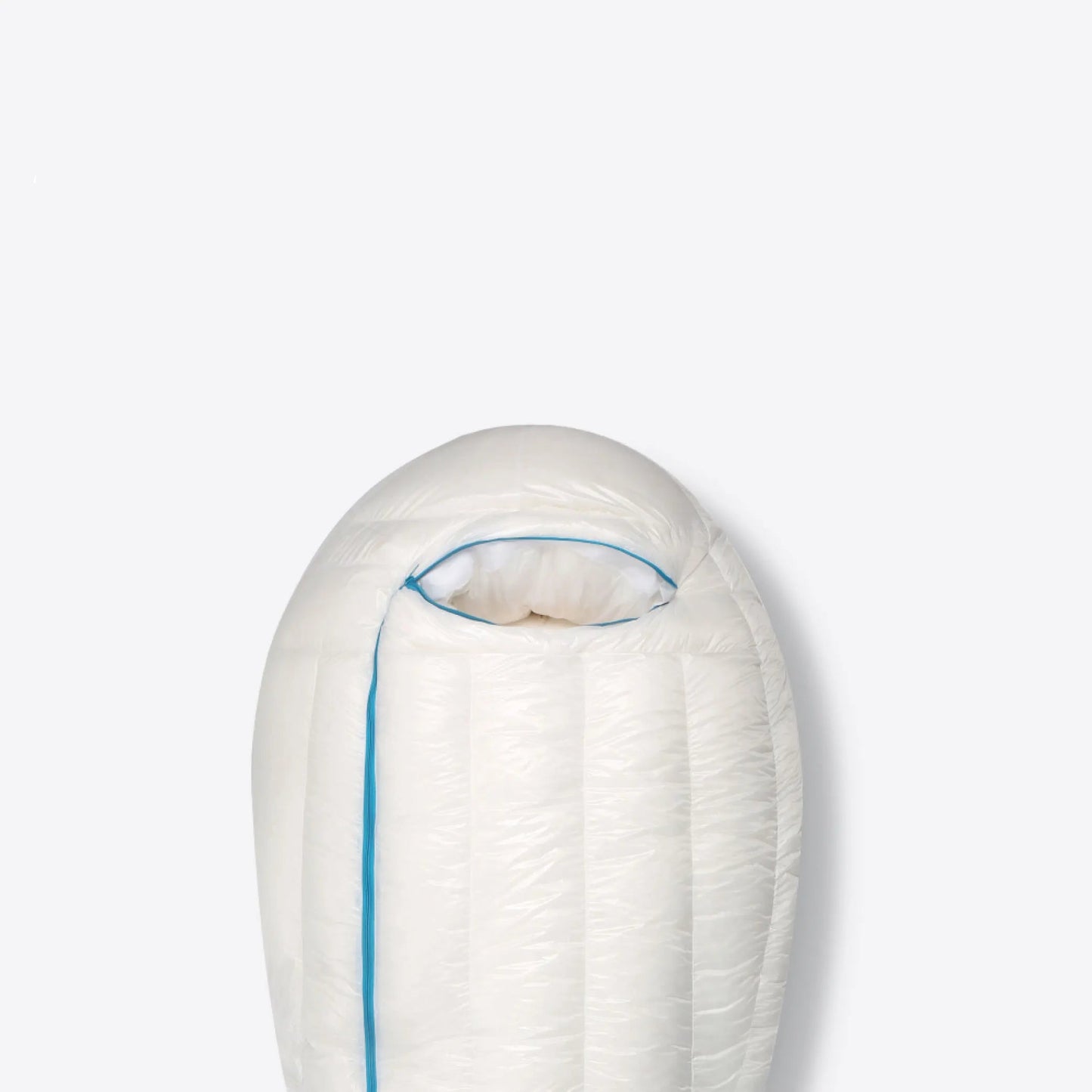
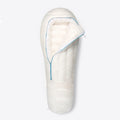
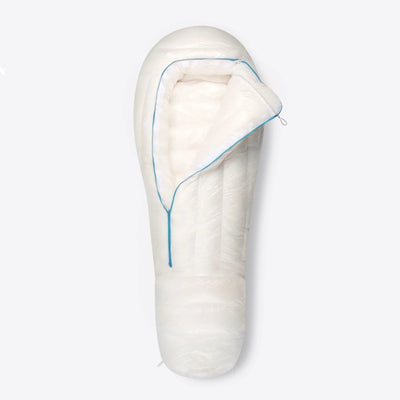
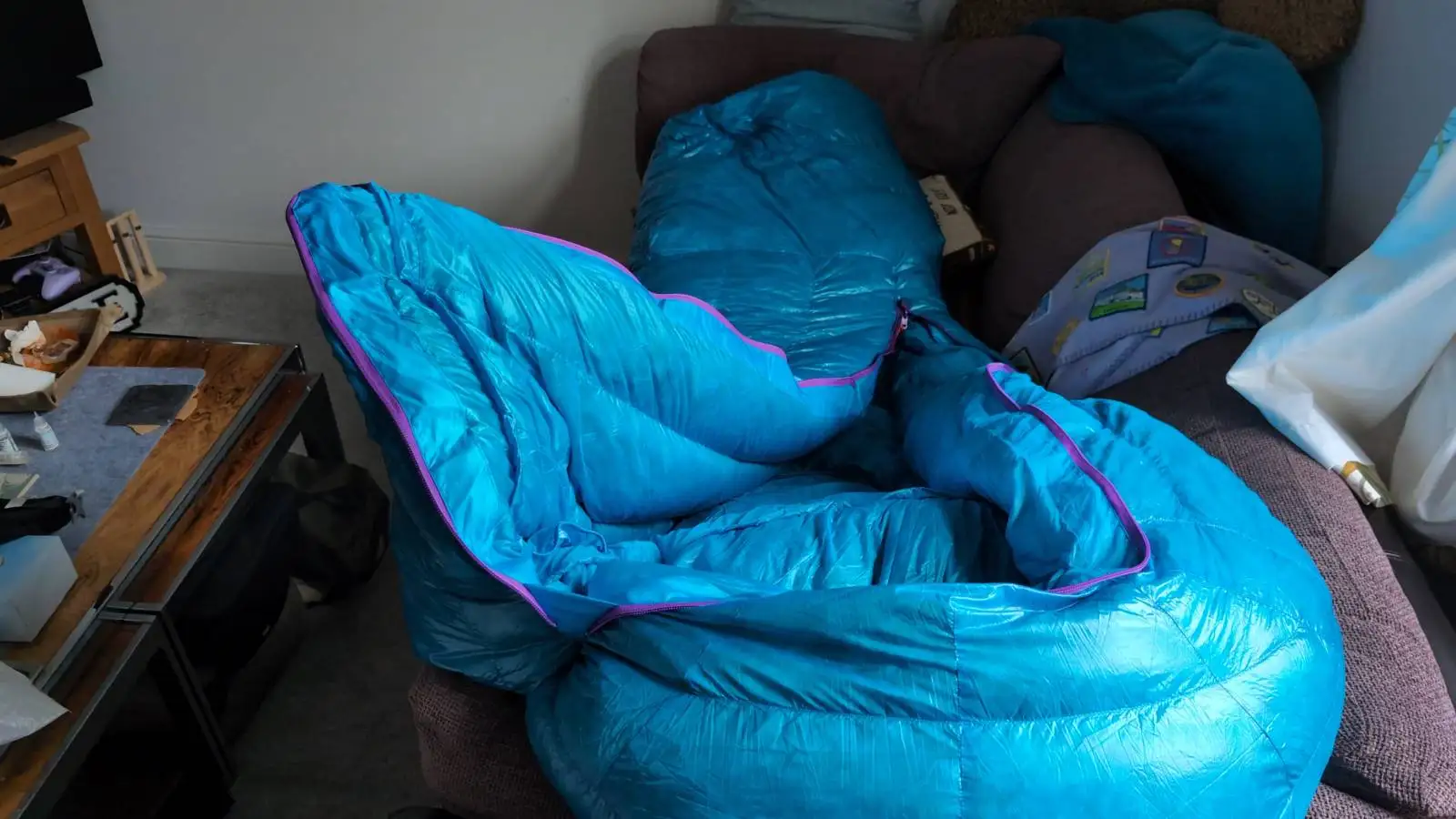
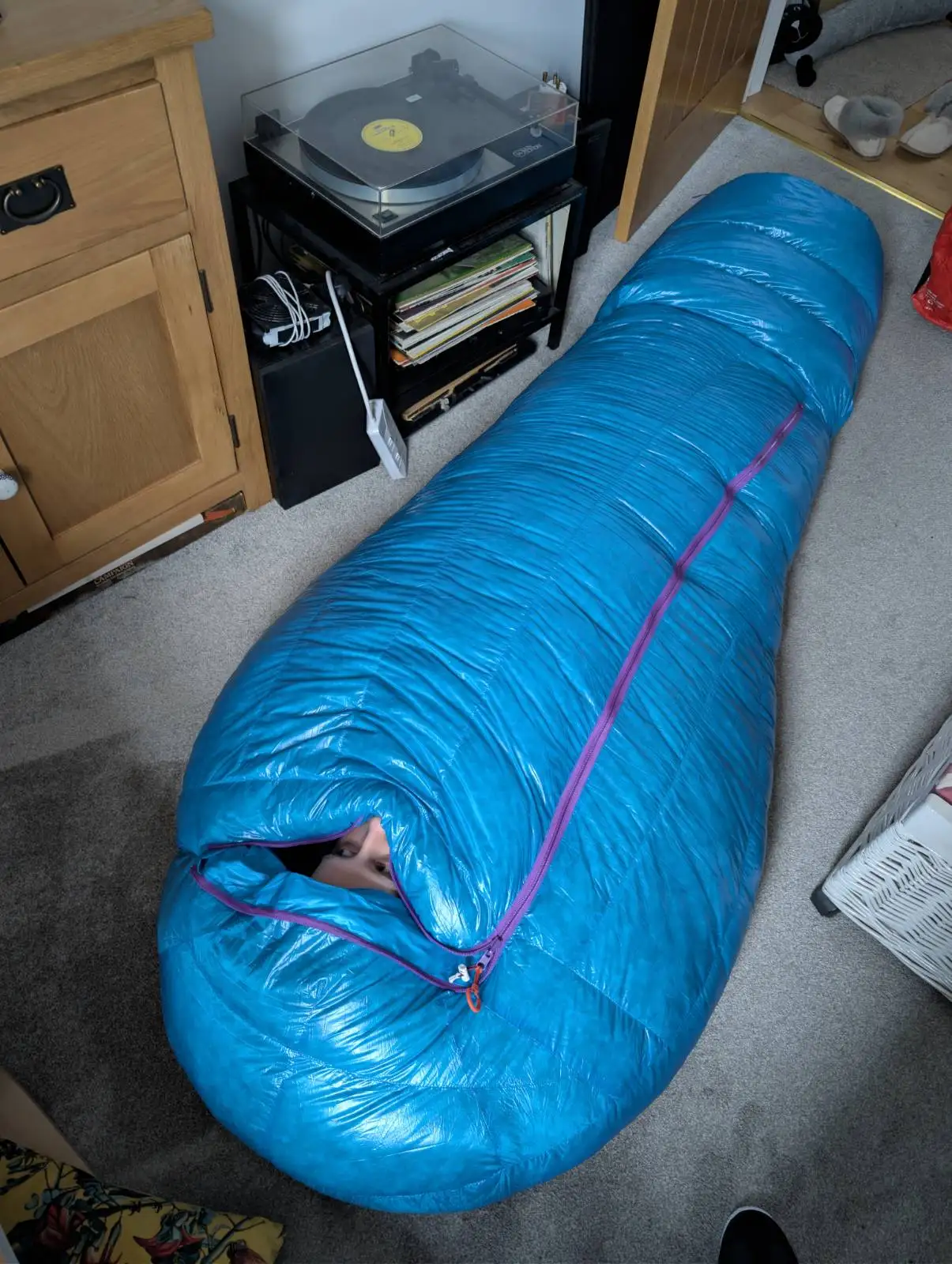
In a deep-cold sleeping bag, heat is rarely lost through the insulation: it escapes through the seams, hood, and zipper. The insulation is divided into baffle boxes with mesh walls to maintain loft, with vertical baffles on the sides and side seams positioned at the bottom. A draft collar doubles the zipper, and the drawstring hood seals the opening around the face. The two-way anti-snag zipper allows you to ventilate the feet without opening the entire bag, while the anatomically shaped footbox wraps around the toes.

Fill power measured at 960 in³/30 g by an independent laboratory
A claimed fill power is only worth it if it is measured. The fill was tested according to the IDFB Part 10-B 2023 standard by the IDFL (International Down and Feather Laboratory), a laboratory specializing in down. The measured fill power is 960 in³/30 g, above the nominal value of 950 cuin (IDFL report #25-891483, available upon request). The Regular size contains 1,135 g of 95% grey goose down, RDS certified.

iFlex® 10D fabric tested to EN 1103 and REACH standards: lightweight, handle with care
The iFlex® 10D fabric passed the physical performance tests of the EN 1103 standard (all criteria passed, report #26-971031) and the chemical analysis of the REACH CE 1907/2006 regulation (compliant, report #26-971032). It is durable water repellent (DWR) and breathable, backed with soft-touch 10D nylon. Thin fabric: keep away from crampons and sharp rock edges. The bag weighs 1,375 g in Regular (1,480 g in Long) and measures 23 × 36 cm packed, with a compression stuff sack and mesh storage bag for storing the down lofted out of season.
For less extreme nights, the Naturehike Snow Petrel PRO700 (comfort -11.1°C, 1,000 g) reduces the load.


Why pay more for the same performance?
The Aegismax Ultra was compared with the Cumulus Excuistic 1200. The finding is simple: you get equivalent technical features and warmth without paying the brand premium. Keep your budget for your next expedition.

Data checked against the brands' official product pages — subject to change.

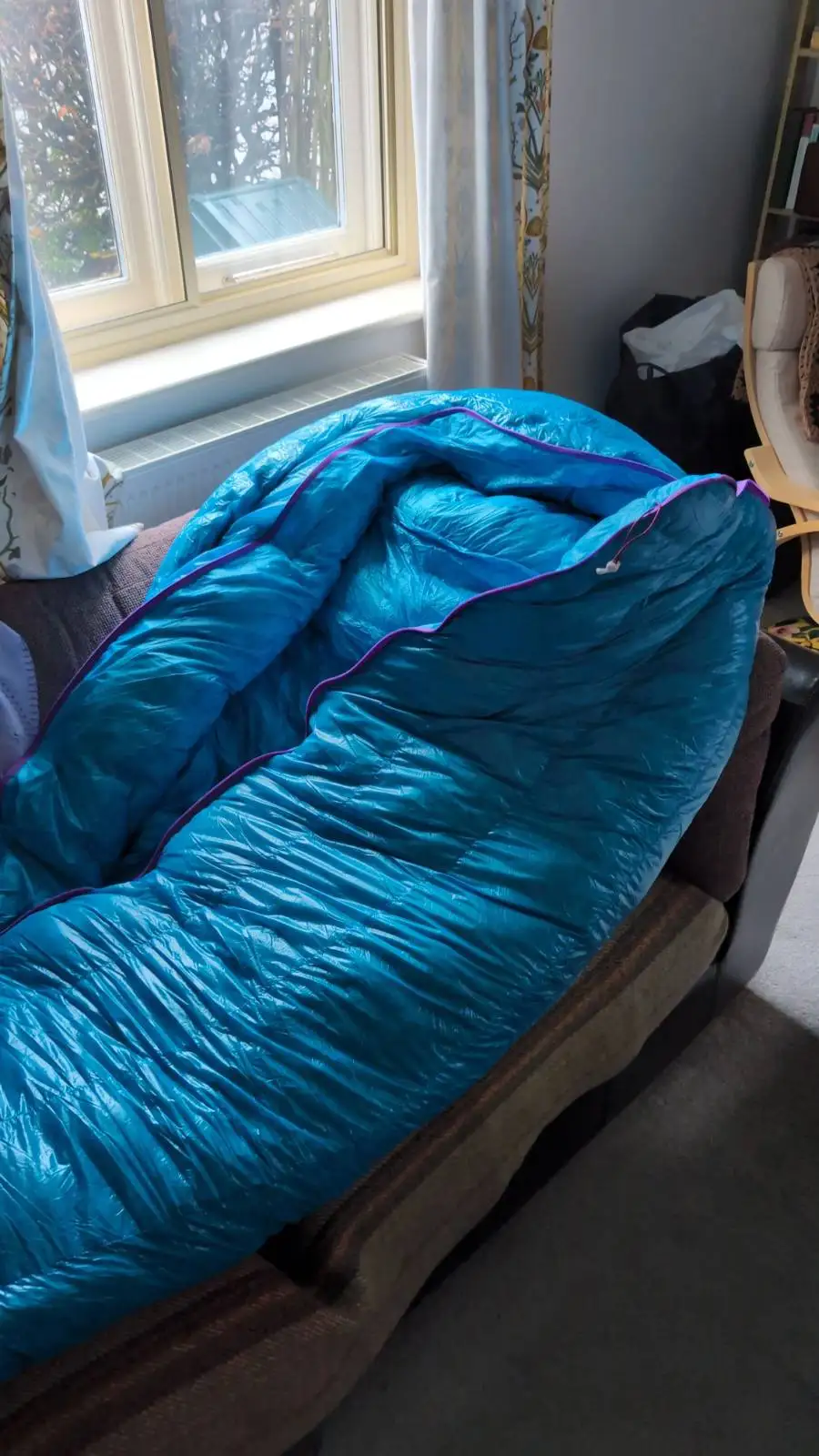
J'ai reçu mon sac aujourd'hui, il est arrivé en parfait état au Royaume-Uni. La livraison a pris 16 jours
Pas encore testé par temps froid, mais il est incroyablement gonflant.
Je mesure 178 cm et j'ai opté pour la taille "Long" ou "Allongée". Je suis très content de mon achat, la taille est parfaite. Je pense que la hauteur maximale serait d'environ 188 cm et que vous seriez un peu à l'étroit en longueur.
Super vendeur et communication. C'est le sac de couchage ultime. Achetez une fois, pleurez une fois 🫡
Aegismax fabrique les meilleurs articles en duvet de toute l'Extrême-Orient.
Doubt about which bag is right for you?
The field guide helps you choose based on skill level, temperature, needs, and weight. Support answers specific questions.
Find my bag Contact supportFrequently Asked Questions
The Aegismax Ultra has a comfort temperature of -30°C and a lower limit temperature of -38°C, measured to the ISO 23537 standard. These values apply under standard conditions: sleeper in thermal base layers, on an insulated sleeping mat. It is designed for mountaineering, winter expeditions, extreme cold bivouac use (4 seasons / Extreme cold).
The Aegismax Ultra is filled with 95% grey goose down, 950 fill power, RDS certified (1,135 g in Regular, 1,200 g in Long). Down offers the best warmth-to-weight ratio: it packs down small and weighs less than synthetic insulation of equivalent warmth, which makes it the natural choice for wild camping and multi-day trekking. On the other hand, it loses efficiency when damp and needs careful drying. The Aegismax Ultra weighs 1375 g, which places it in the standard category.
A down sleeping bag is insulated with goose or duck down and feathers, whereas a synthetic bag uses polyester fibres. Down offers a better warmth-to-weight ratio and packs smaller than synthetic insulation of equivalent warmth; synthetic keeps more of its insulation when damp.
A well-maintained down sleeping bag retains 80 to 90% of its insulating properties after 5 to 10 years of regular use. The main cause of degradation is long-term compressed storage, which gradually breaks the down clusters. Washing once a year with a down-specific detergent and storing the bag uncompressed out of season significantly extend the life of the fill.
The ideal comfort rating depends on intended use. For summer trekking in France (Alps, Pyrenees, GR20), a comfort temperature between 0°C and +3°C covers almost all situations. For static summer camping in the lowlands, +5°C to +10°C is enough. For extreme cold or winter wild camping in the mountains, aim for -10°C comfort minimum. The comfort temperature is always measured to EN 13537 / ISO 23537-1 / GB/T 38426.