


GB/T 38426 and ISO 23537 thermal certification: reading values and conditions of validity
The BASE1100 is certified for a comfort temperature of -16°C and a limit temperature of -25°C according to GB/T 38426-2019 and ISO 23537-1 standards, which are measurement protocols using a thermal mannequin under standardized conditions. These two standards coexist with identical test protocols: the values are directly comparable between models certified under either reference. The extreme temperature of -50°C corresponds to the theoretical survival threshold defined by the standard, applicable only in emergency situations with full equipment. In field conditions at this range, a sleeping pad with an R-value greater than 5, a merino base layer, and windproof protection are non-negotiable prerequisites.

650FP water-repellent duck down: 1000 mm cleanliness and RDS certified
The filling is a duck down with a water-repellent treatment and a 650FP rating, with a 90% down cluster content and a 1000 mm fill power cleanliness certified by a third-party laboratory. The 650FP fill power positions this model below the 750-800FP of ultralight bags: compressed volume and weight are higher than equivalent thermal insulation, offset by a lower production cost and increased moisture resistance thanks to the water-repellent treatment applied directly to the down. The Responsible Down Standard (RDS) certification guarantees the traceability of the down supply chain, from farming to processing.

Vertical box construction and 14 points/3 cm anti-puncture thread: anti-migration and anti-leak
The construction uses a vertical box structure with independent compartments and high-density down-proof thread at 14 stitches per 3 cm. The vertical box keeps the fill in place without shifting during the night, whereas a sewn-through construction creates cold spots at every stitch line. Three design features limit heat loss in critical areas: a full-length draft tube along the zipper, a mummy hood with independent drawcords, and an insulated 3D wraparound foot box.
If your winter conditions require going even lower than -15°C, the Naturehike JV1300 reaches -17°C comfort with 1,300g of 750FP down and 20D Toray fabric.



Why pay more for the same performance?
The Naturehike BASE1100 was compared with the Cumulus Alaska 1100. The finding is simple: you get equivalent technical features and warmth without paying the brand premium. Keep your budget for your next expedition.
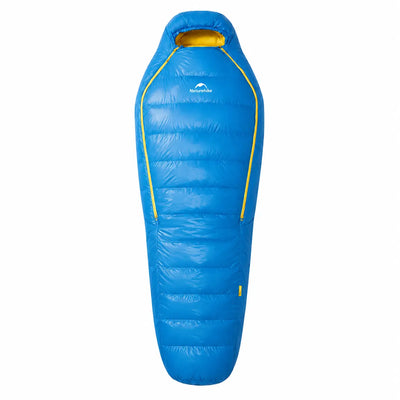

Data checked against the brands' official product pages — subject to change.

Doubt about which bag is right for you?
The field guide helps you choose based on skill level, temperature, needs, and weight. Support answers specific questions.
Find my bag Contact supportFrequently Asked Questions
The Naturehike BASE1100 has a comfort temperature of -16°C and a lower limit temperature of -25°C, measured to the ISO 23537 / GB/T38426 standard. These values apply under standard conditions: sleeper in thermal base layers, on an insulated sleeping mat. It is designed for Mountaineering, winter bivouac use (Winter).
The Naturehike BASE1100 is filled with 650 cuin. The Naturehike BASE1100 weighs 1530 g, which places it in the standard category.
A down sleeping bag is insulated with goose or duck down and feathers, whereas a synthetic bag uses polyester fibres. Down offers a better warmth-to-weight ratio and packs smaller than synthetic insulation of equivalent warmth; synthetic keeps more of its insulation when damp.
A well-maintained down sleeping bag retains 80 to 90% of its insulating properties after 5 to 10 years of regular use. The main cause of degradation is long-term compressed storage, which gradually breaks the down clusters. Washing once a year with a down-specific detergent and storing the bag uncompressed out of season significantly extend the life of the fill.
The ideal comfort rating depends on intended use. For summer trekking in France (Alps, Pyrenees, GR20), a comfort temperature between 0°C and +3°C covers almost all situations. For static summer camping in the lowlands, +5°C to +10°C is enough. For extreme cold or winter wild camping in the mountains, aim for -10°C comfort minimum. The comfort temperature is always measured to EN 13537 / ISO 23537-1 / GB/T 38426.