


Extreme cold sleeping bag certified to -17.7°C GB/T 38426
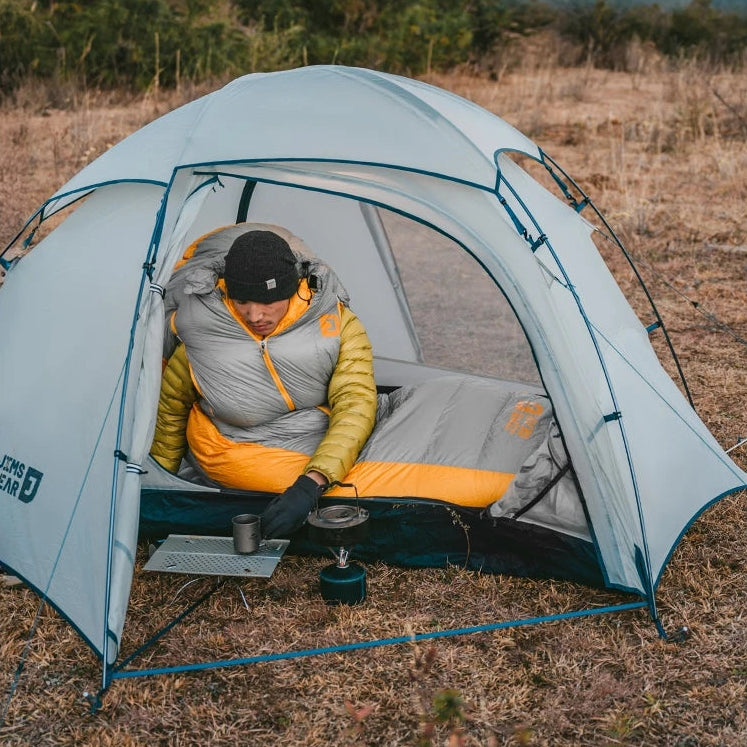
The Naturehike JV1300 extreme cold sleeping bag is tested according to GB/T 38426 and ISO 23537 standards using an instrumented thermal mannequin in controlled conditions. The comfort rating of -17.7°C corresponds to a standard female user sleeping in a relaxed position. The limit rating of -26.7°C is the thermal equilibrium threshold for a male in a curled-up position. The extreme rating of -52.7°C is a theoretical survival threshold reserved for emergency situations. For an extreme cold sleeping bag, a high R-value sleeping pad is imperative: no insulation from the ground is provided without one.

1300g of 750 FP RDS down: the certified extreme cold down
With 1300g of 750 FP white goose down, 90% down content, and a certified cleanliness of 1000mm, the JV1300 is a high-loft down sleeping bag with substantial fill for nights below -15°C. The RDS (Responsible Down Standard) certification guarantees the traceability of the down from the farm to the processing facility. The vertical velvet construction keeps each chamber as an independent volume, eliminating cold spots caused by down compression in high-fill winter sleeping bags.

Wind deflectors and 3D footbox for winter bivouacking
The anti-wind side baffles on both sides of the JV1300 winter sleeping bag block cold air infiltration from the sides, a critical area of heat loss when bivouacking below -10°C. The tubular draft tube along the anti-snag YKK zipper insulates the zip line. The adjustable collar wraps around the cervical area. The covered 3D footbox protects the feet without compressing the fill, a frequent flaw in mummy bags with a simple tubular shell. These systems are reserved for the 1000g and 1300g versions.

Toray 20D fabric and dual zippers for free arm movement
The Toray 20D nylon DWR outer fabric is tear-resistant and sheds surface water without adding weight to the bag. The 10D down-proof nylon lining prevents down migration over the long term. The double side zip allows you to take your arms out without leaving the warm down, which is useful for nighttime tasks inside the tent. Compressed to Ø27 x 45 cm and weighing 1.78kg in size M, the JV1300 comes with a compression sack and a mesh bag for long-term storage of the bivouac sleeping bag.
If your expeditions require keeping below -20°C, the Naturehike UL1100 reaches -21°C comfort with 850FP, triangular baffles, and 10D 500T fabric.



Doubt about which bag is right for you?
The field guide helps you choose based on skill level, temperature, needs, and weight. Support answers specific questions.
Find my bag Contact supportFrequently Asked Questions
The Naturehike JV1300 has a comfort temperature of -17.7°C and a lower limit temperature of -26.7°C, measured to the GB/T 38426 / ISO 23537 standard. These values apply under standard conditions: sleeper in thermal base layers, on an insulated sleeping mat. It is designed for mountaineering, winter trekking, extreme cold bivouac, expedition use (4 seasons / extreme cold).
The Naturehike JV1300 is filled with 750 FP white goose down, 90% down, RDS certified, 1300g. Down offers the best warmth-to-weight ratio: it packs down small and weighs less than synthetic insulation of equivalent warmth, which makes it the natural choice for wild camping and multi-day trekking. On the other hand, it loses efficiency when damp and needs careful drying. The Naturehike JV1300 weighs 1780 g, which places it in the standard category.
A down sleeping bag is insulated with goose or duck down and feathers, whereas a synthetic bag uses polyester fibres. Down offers a better warmth-to-weight ratio and packs smaller than synthetic insulation of equivalent warmth; synthetic keeps more of its insulation when damp.
A well-maintained down sleeping bag retains 80 to 90% of its insulating properties after 5 to 10 years of regular use. The main cause of degradation is long-term compressed storage, which gradually breaks the down clusters. Washing once a year with a down-specific detergent and storing the bag uncompressed out of season significantly extend the life of the fill.
The ideal comfort rating depends on intended use. For summer trekking in France (Alps, Pyrenees, GR20), a comfort temperature between 0°C and +3°C covers almost all situations. For static summer camping in the lowlands, +5°C to +10°C is enough. For extreme cold or winter wild camping in the mountains, aim for -10°C comfort minimum. The comfort temperature is always measured to EN 13537 / ISO 23537-1 / GB/T 38426.