

Synthetic winter bivouac sleeping bag, comfort rating -7°C: insulation capacity and real-world conditions
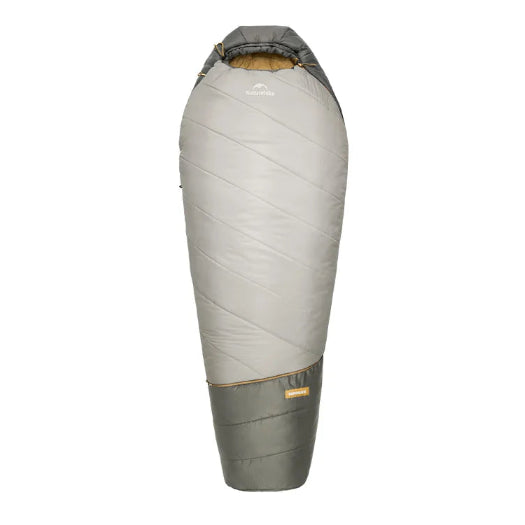
The Naturehike MG360 winter sleeping bag is sized for cold nights between -5°C and -15°C: autumn at altitude in the Alps and Pyrenees, winter in low and medium mountain ranges, and base camps in snowy conditions. The comfort temperature is -7°C, measured according to the GB/T 38426-2019 and ISO 23537 standards with a thermal mannequin, high R-value sleeping pad, and long underwear. In real-world conditions—standard R-value 2 to 3 mattress, ambient humidity, accumulated fatigue—allow for a 3 to 5°C margin and a suitable insulating mattress: the ground transmits cold via conduction regardless of the bag. The mummy cut with an adjustable hood and shoulder baffle reduces nocturnal heat loss in the most exposed areas.
SUNDOUCE Gold 180 g/m² insulation: insulation maintained in damp conditions
The SUNDOUCE Gold 180 g/m² double-layer insulation represents 1,265 g of insulating material on the L model — a density three times higher than the MG120. For winter bivouacking, the technical advantage of synthetic material is clear: SUNDOUCE microfilaments retain their insulating capacity even when they absorb moisture, whereas natural down loses 30 to 40% of its effectiveness when wet. In cold, damp conditions — high-altitude fog, prolonged condensation in a tent, melting snow — this retention of performance is a factor to consider when choosing insulation. The stated insulating power is 5.29 CLO, with a bacterial inhibition rate of over 90% maintained after machine washing, without any specific protocol. The outer fabric made of GRS-certified 20D nylon features a fluorine-free water-repellent treatment verified by an independent report. The compressed dimensions (25 × 22 × 38 cm in size M) are greater than those of a down bag with the same thermal rating — a constraint to anticipate for routes requiring gear carrying.
Adjustable hood and shoulder yoke
The adjustable hood tightens around the face to limit heat loss through the head, a major point of thermal loss in extreme cold for this winter sleeping bag. The shoulder baffle completes this feature by forming an additional barrier against cold air entering at the neck, without restricting movement during sleep.
Compressed volume: an intentional trade-off compared to down
Once compressed, the MG360 takes up between 25×22×38 cm (size M) and 26×23×42 cm (XL), a larger volume than a down sleeping bag of equivalent thermal rating. This is the direct trade-off for choosing synthetic insulation for the moisture tolerance of this extreme cold sleeping bag, which should be anticipated when calculating carrying volume.
For a winter bivouac involving carrying gear, the Aegismax G3 covers -8°C comfort for 1,350 g with 800 cuin down filling.

Doubt about which bag is right for you?
The field guide helps you choose based on skill level, temperature, needs, and weight. Support answers specific questions.
Find my bag Contact supportFrequently Asked Questions
The Naturehike MG360 has a comfort temperature of -7°C and a lower limit temperature of -14.2°C, measured to the ISO 23537 / GB/T 38426-2019 standard. These values apply under standard conditions: sleeper in thermal base layers, on an insulated sleeping mat. It is designed for Winter bivouac use (4 seasons).
The Naturehike MG360 is filled with Synthetic Gold 180 gsm. Synthetic insulation keeps insulating when damp, dries quickly and needs no special care — suited to changeable conditions or family trips. The Naturehike MG360 weighs 1440 g, which places it in the standard category.