


509 g quilt: lighten your backpack when the stages pile up
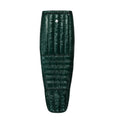
When packing for a multi-stage trip, the sleeping bag is one of the heaviest and bulkiest items in your backpack. The Aegismax Wind Hard Twilight trekking sleeping bag, a quilt-style bag, eliminates unnecessary weight without compromising much insulation: the zipper, hood, and back insulation, which is flattened anyway when lying on your back. This brings the weight down to 509 g in Regular size. Bottom insulation is provided by the sleeping pad (sold separately) to which the quilt straps: without a suitable pad or properly tightened straps, the advertised comfort will not be achieved.

Four straps and an adjustable collar: keep the cold out when you move
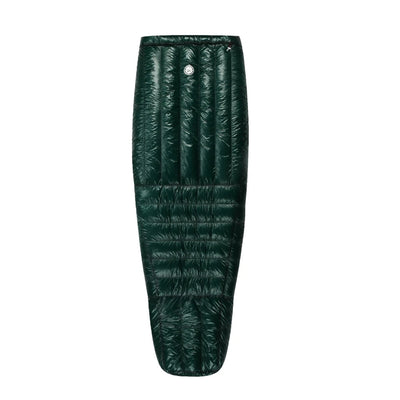
The weak point of a quilt is the cold air that seeps in as soon as the sleeper turns over. Four adjustable elastic straps (2 long, 2 short) keep the quilt on the mattress, and the adjustable insulating draft collar cinches around the neck to keep warm air in. The RDS-certified 800-fill-power Down Pro fill (350 g in Regular), which is water-resistant, is protected by a DWR-treated 10D iFlex® ripstop fabric. The delicate fabric requires careful handling on this lightweight sleeping bag.

Trapezoidal footbox: comfortable feet without a zipper
Without a zipper or enclosed bag, the feet are often the first area where the cold is felt, and a space that is too tight prevents settling in. The trapezoidal footbox creates extra room to stay comfortable and warm, on a quilt format used several nights in a row.
Compression 15 × 27 cm: a compact sleeping bag that leaves room for the rest
Packed in its compression sack, the quilt measures 15 × 27 cm in both Regular and Long sizes: a compact sleeping bag that frees up space in your backpack on multi-day trips. The included breathable mesh storage bag is for storing the down quilt between outings. Total weight with both bags: 589 g (Regular).
For a classic mummy bag with a closure, the Black Snow 0 degrees is another option. To compare the other quilts, discover the quilt collection.


Why pay more for the same performance?
The Aegismax Wind Hard Twilight was compared with the Decathlon Sprint. The finding is simple: you get equivalent technical features and warmth without paying the brand premium. Keep your budget for your next expedition.

Data checked against the brands' official product pages — subject to change.

Doubt about which bag is right for you?
The field guide helps you choose based on skill level, temperature, needs, and weight. Support answers specific questions.
Find my bag Contact supportFrequently Asked Questions
The Aegismax Wind Hard Twilight has a comfort temperature of 0°C and a lower limit temperature of -5°C, measured to the ISO 23537 & EN 13537 standard. These values apply under standard conditions: sleeper in thermal base layers, on an insulated sleeping mat. It is designed for hiking, trekking use (3 seasons).
The Aegismax Wind Hard Twilight is filled with Down Pro 800 cuin duvet, RDS certified, water-resistant. Down offers the best warmth-to-weight ratio: it packs down small and weighs less than synthetic insulation of equivalent warmth, which makes it the natural choice for wild camping and multi-day trekking. On the other hand, it loses efficiency when damp and needs careful drying. Stated fill power: 800 cuin (the higher the value, the more the down insulates for a given weight). The Aegismax Wind Hard Twilight weighs 509 g, which places it in the ultralight category.
A 3-season sleeping bag is designed for spring, summer and autumn. Its comfort temperature sits between 0°C and +5°C, which covers most wild camps in France up to 2,500 m outside winter conditions. In winter or above 2,500 m, a dedicated cold-weather bag is needed.
A 3-season bag is suited to night-time temperatures between roughly 0°C and +15°C. Below 0°C, thermal comfort is no longer assured without extra equipment (liner, additional sleepwear). Above +15°C, most sleepers will find the bag too warm: venting through the foot zip helps regulate.
For the vast majority of walkers and trekkers in France (GR20, GR5, Tour du Mont Blanc from June to September), a 3-season bag with a 0°C comfort rating is sufficient. A 4-season bag is only needed above 3,000 m outside summer, in winter conditions, or for exposed high-altitude wild camps in autumn.