

0-degree semi-rectangular sleeping bag: real-world usage and conditions
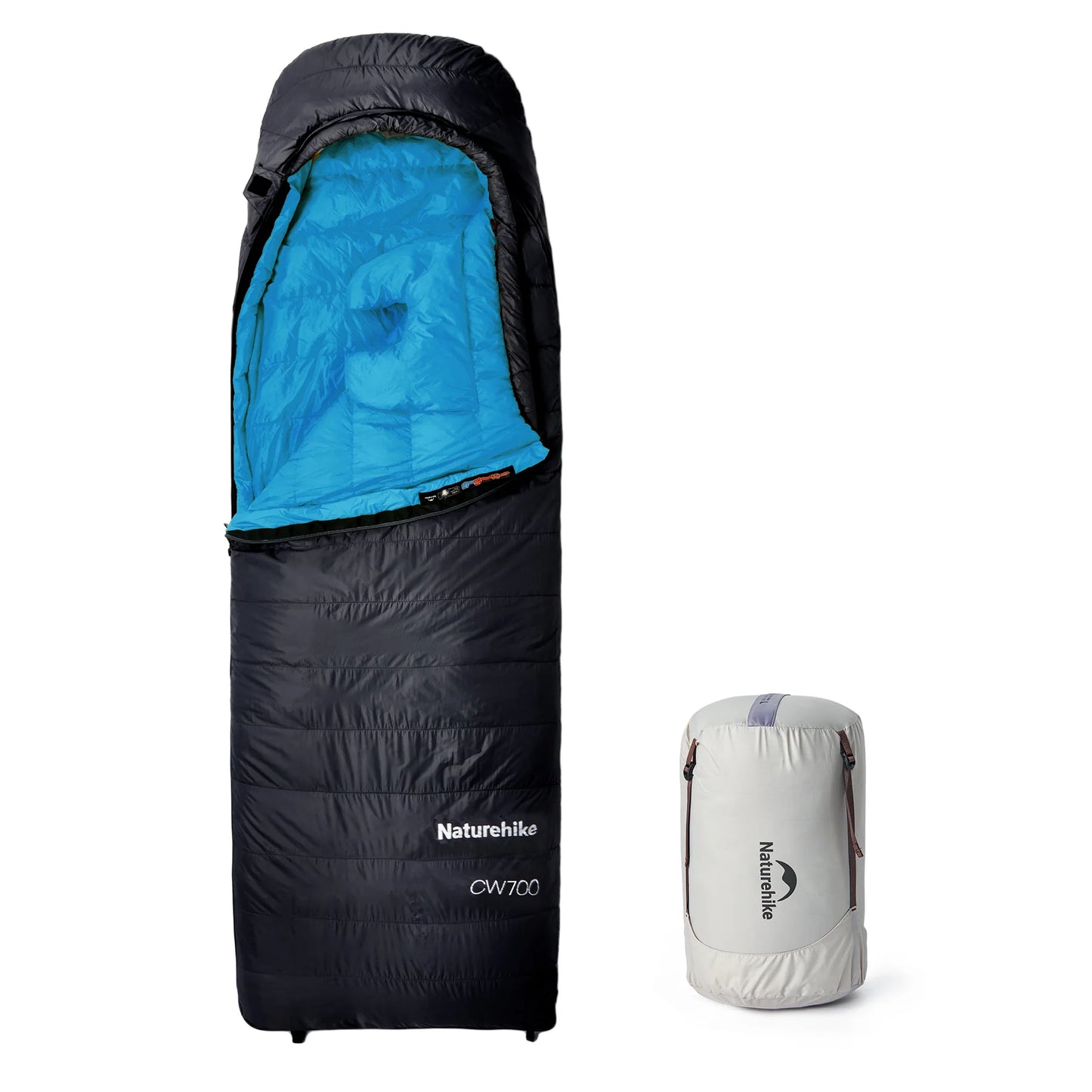
The Naturehike CW700 sleeping bag features a cut that is tapered at the shoulders and wider in the lower half. This geometry reduces the volume of air to be heated around the torso while leaving room to bend your legs while sleeping. The comfort temperature is -1.7°C — a value measured in the laboratory according to the ISO 23537 standard, with an insulating mat, long underwear, and the hood closed. In real-world conditions without this equipment, allow for a margin of 3 to 5°C.
650 cuin RDS-certified down: what the certification covers
The 650-fill-power duck down, RDS (Responsible Down Standard) certified, guarantees the traceability of the down supply chain — not the thermal performance of the insulation. The 650 fill power is lower than the 800 fill power of some models in the range: for an equal mass, the loft is lower, which translates to a greater weight (1,070 g) to achieve the same temperature rating. The 20D ripstop fabric with a DWR water-repellent treatment offers resistance to light dew, but provides no protection in the event of sustained rain.
For practitioners who prioritize a more favorable weight-to-insulation ratio in the same thermal range, the Aegismax G2 reaches a comfort rating of -2°C with a lower weight thanks to its 800-fill power down.

Doubt about which bag is right for you?
The field guide helps you choose based on skill level, temperature, needs, and weight. Support answers specific questions.
Find my bag Contact supportFrequently Asked Questions
The Naturehike CW700 has a comfort temperature of -1.7°C and a lower limit temperature of -7.9°C, measured to the ISO 23537 / GB/T 38426-2019 standard. These values apply under standard conditions: sleeper in thermal base layers, on an insulated sleeping mat. It is designed for hiking, bivouacking use (3-4 seasons).
The Naturehike CW700 is filled with 650 cuin. The Naturehike CW700 weighs 1070 g, which places it in the lightweight category.
For multi-day trekking, the main criterion is weight: aim for under 1 kg, ideally between 600 g and 900 g. A high-loft down bag (700 cuin minimum) makes this possible while keeping enough insulation for mountain nights. The comfort temperature should match the area and season: 0°C to +3°C for the Alps and Pyrenees in summer.
Hiking generally means a day outing with no overnight stay, while trekking involves several days of walking with wild camping or nights in mountain huts. The distinction matters when choosing a sleeping bag: on a day hike, no bag is needed. When trekking, weight and packed size become decisive because the bag is carried every day.
In France, night-time mountain temperatures range between 0°C and +10°C in summer depending on altitude and area. A bag with a comfort rating between 0°C and +3°C covers almost all French routes (GR20, GR5, Tour du Mont Blanc) from June to September. Above 3,000 m or outside summer, allow an extra safety margin.