

Ultralight trekking sleeping bag: 506 g to tackle multiple stages without weighing down your backpack
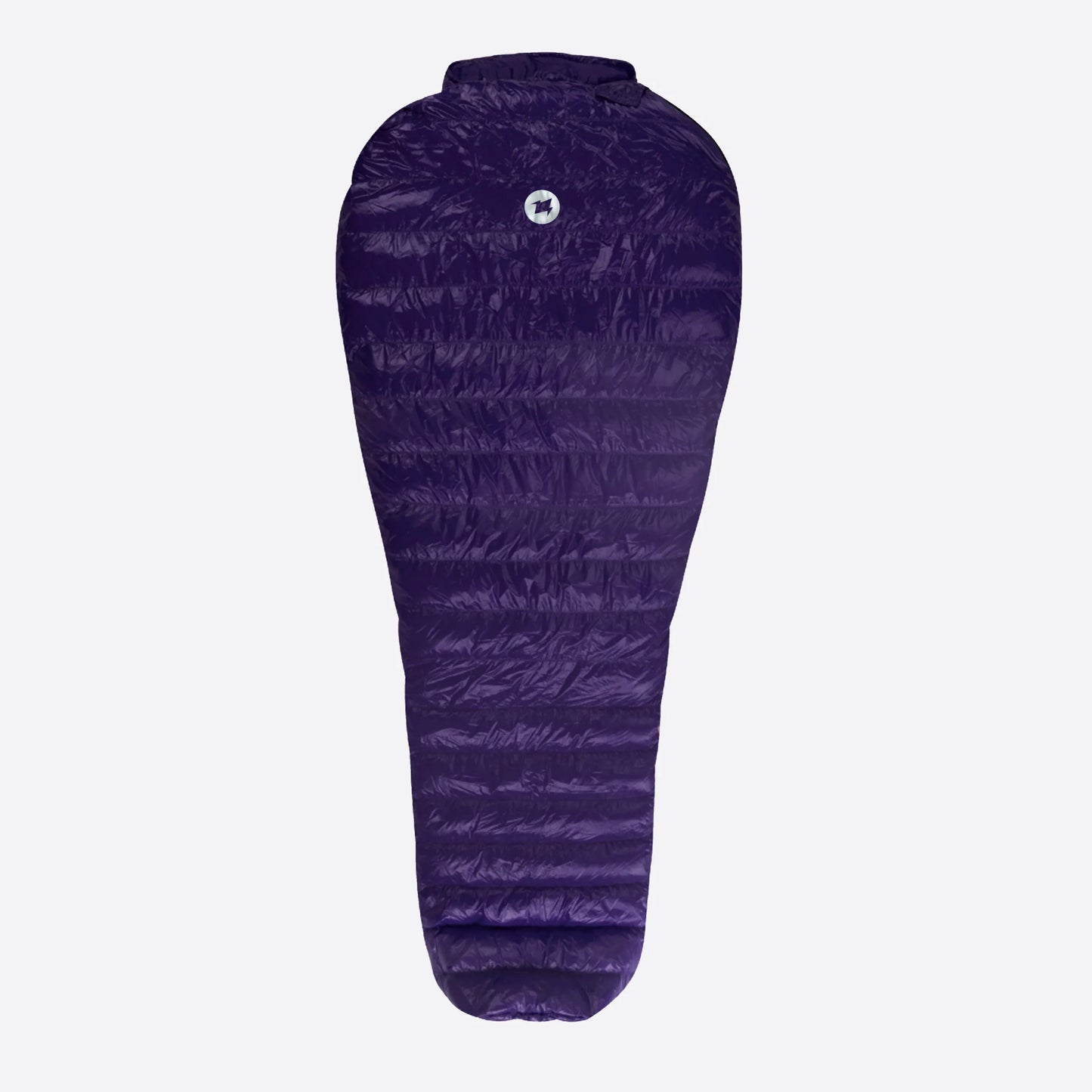
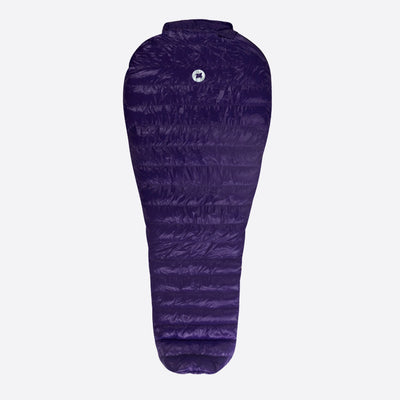
Fifteen kilometres into a trek, the backpack already exceeds its initial weight limit, and the sleeping bag is one of the heaviest items. The ultralight trekking sleeping bag Aegismax Nano weighs 506 g in Regular. Its 10°C comfort rating is designed for mild nights with an insulated sleeping pad. For even greater space savings, the Aegismax Mini is also available.
iFlex 20D ripstop: a lightweight sleeping bag that can handle ground and tarp, within its limits
The recurring objection to ultra-light gear: the thin fabric will puncture or tear. For a lightweight sleeping bag, the DWR-treated iFlex 20D ripstop shell is durable for its weight, while the iFlex 20D SoftTouch lining remains soft to the touch. Ripstop limits the spread of a tear without making the bag indestructible: a sleeping pad prevents direct abrasion. DWR repels light moisture and dirt, but is not equivalent to a waterproof shelter. The RDS-certified 700 cuin Ultra Dry white goose down is also treated with a water-repellent finish (250 g in Regular).
3D footbox and self-sealing vent: a trekking sleeping bag that lets your feet breathe
After a long stage, feet that overheat or go numb ruin sleep. The 3D footbox conforms to the natural position of the foot, and the self-sealing vent releases excess heat without opening the main closure, useful for a trekking sleeping bag used during mild nights. The hoodless mummy cut cinches at the neck with a draft collar and a double elastic cord: the beanie remains necessary for the head. The YKK#5 two-way zip completes the ventilation.
13 × 22 cm and 544 g with the bags: check the volume before closing the backpack
Volume matters as much as weight in a backpack with limited capacity. Packed in its ultralight compression sack, the Nano measures 13 × 22 cm. In Regular: 250 g of down, 506 g net, 544 g with the stuff sacks. In Lengthen: 280 g of down, 574 g net, 612 g with the stuff sacks. A mesh bag is included for storage between outings, allowing the down to decompress. Regular and Lengthen versions from the same series can be zipped together.
However, if you wish to take the concept of minimalism even further by completely removing the hood to reduce bulk to the absolute minimum, the Aegismax Mini version is designed exactly for this purpose.
Why pay more for the same performance?
The Aegismax Nano was compared with the Millet Light Down 11°. The finding is simple: you get equivalent technical features and warmth without paying the brand premium. Keep your budget for your next expedition.

Data checked against the brands' official product pages — subject to change.

Doubt about which bag is right for you?
The field guide helps you choose based on skill level, temperature, needs, and weight. Support answers specific questions.
Find my bag Contact supportFrequently Asked Questions
The Aegismax Nano has a comfort temperature of 10°C and a lower limit temperature of 5°C, measured to the EN 13537 standard. These values apply under standard conditions: sleeper in thermal base layers, on an insulated sleeping mat. It is designed for hiking, bivouacking use (Summer).
The Aegismax Nano is filled with Ultra Dry 700 cuin white goose down, RDS certified (250 g in Regular). Down offers the best warmth-to-weight ratio: it packs down small and weighs less than synthetic insulation of equivalent warmth, which makes it the natural choice for wild camping and multi-day trekking. On the other hand, it loses efficiency when damp and needs careful drying. Stated fill power: 700 cuin (the higher the value, the more the down insulates for a given weight). The Aegismax Nano weighs 506 g, which places it in the ultralight category.
A down sleeping bag is insulated with goose or duck down and feathers, whereas a synthetic bag uses polyester fibres. Down offers a better warmth-to-weight ratio and packs smaller than synthetic insulation of equivalent warmth; synthetic keeps more of its insulation when damp.
A well-maintained down sleeping bag retains 80 to 90% of its insulating properties after 5 to 10 years of regular use. The main cause of degradation is long-term compressed storage, which gradually breaks the down clusters. Washing once a year with a down-specific detergent and storing the bag uncompressed out of season significantly extend the life of the fill.
The ideal comfort rating depends on intended use. For summer trekking in France (Alps, Pyrenees, GR20), a comfort temperature between 0°C and +3°C covers almost all situations. For static summer camping in the lowlands, +5°C to +10°C is enough. For extreme cold or winter wild camping in the mountains, aim for -10°C comfort minimum. The comfort temperature is always measured to EN 13537 / ISO 23537-1 / GB/T 38426.