


800 cuin box construction with no cold spots
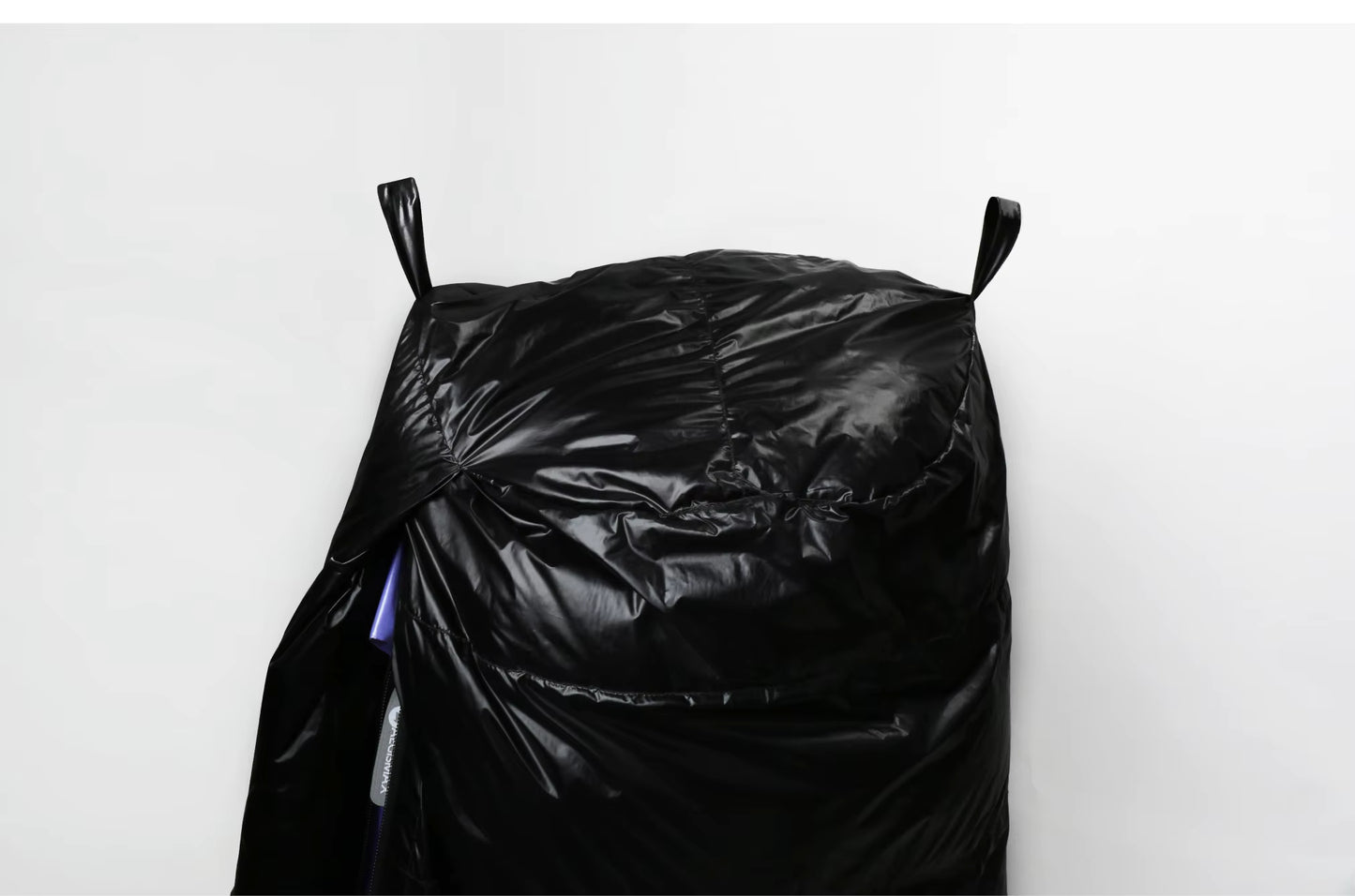
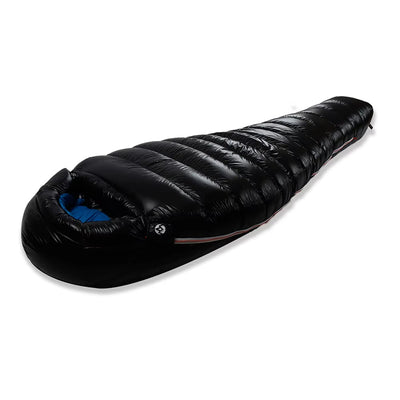
The 800-fill power RDS-certified Lofty white goose down filling in a 60/40 ratio is distributed in a box-baffled construction with mesh walls: each chamber maintains loft independently, which eliminates cold spots and heat loss. The EN 13537 temperature range certifies comfort at +3°C and a limit of -2°C. The extreme threshold of -18°C remains a theoretical survival indicator, unrelated to comfortable use during a bivouac.

4-chamber hood and air deflector
The hood with 4 independent chambers and a dual drawstring maintains loft around the head even when sleeping on your side, limiting heat loss in the most exposed area. The tubular air baffle running along the 2-way YKK #5 zipper blocks cold air from seeping in along the slide. The 3D anatomical footbox preserves the volume of the insulation around the feet without compression, a common weak point in ultralight bags with thin shells.

762 g and 6 L compressed for multi-day trekking
Compressed into its 40g XS bag, the G1 reaches 6 L in Regular, a volume perfectly suited for a lightweight compact sleeping bag with natural down. An 800 cuin rating ensures rapid loft recovery upon opening, even after days of compression. The Long version (818 g) covers body types up to 185 cm. The Regular and Long sizes can be zipped together for duo use. The kit includes a mesh storage bag for long-term storage.
If wet conditions are common on your route and you prefer ISO 23537-certified synthetic insulation, the Naturehike MG270 provides a -2°C comfort rating with a fluorine-free GRS fabric.


Why pay more for the same performance?
The Aegismax G1 was compared with the Sea to Summit Ascent. The finding is simple: you get equivalent technical features and warmth without paying the brand premium. Keep your budget for your next expedition.

Data checked against the brands' official product pages — subject to change.

Doubt about which bag is right for you?
The field guide helps you choose based on skill level, temperature, needs, and weight. Support answers specific questions.
Find my bag Contact supportFrequently Asked Questions
The Aegismax G1 has a comfort temperature of 3°C and a lower limit temperature of -2°C, measured to the EN 13537 standard. These values apply under standard conditions: sleeper in thermal base layers, on an insulated sleeping mat. It is designed for trekking, long-distance hiking, wild camping use (3 seasons).
The Aegismax G1 is filled with 800-fill power white goose down, RDS certified. Down offers the best warmth-to-weight ratio: it packs down small and weighs less than synthetic insulation of equivalent warmth, which makes it the natural choice for wild camping and multi-day trekking. On the other hand, it loses efficiency when damp and needs careful drying. The Aegismax G1 weighs 762 g, which places it in the ultralight category.
A down sleeping bag is insulated with goose or duck down and feathers, whereas a synthetic bag uses polyester fibres. Down offers a better warmth-to-weight ratio and packs smaller than synthetic insulation of equivalent warmth; synthetic keeps more of its insulation when damp.
A well-maintained down sleeping bag retains 80 to 90% of its insulating properties after 5 to 10 years of regular use. The main cause of degradation is long-term compressed storage, which gradually breaks the down clusters. Washing once a year with a down-specific detergent and storing the bag uncompressed out of season significantly extend the life of the fill.
The ideal comfort rating depends on intended use. For summer trekking in France (Alps, Pyrenees, GR20), a comfort temperature between 0°C and +3°C covers almost all situations. For static summer camping in the lowlands, +5°C to +10°C is enough. For extreme cold or winter wild camping in the mountains, aim for -10°C comfort minimum. The comfort temperature is always measured to EN 13537 / ISO 23537-1 / GB/T 38426.