

Heavyweight down insulation for winter trekking
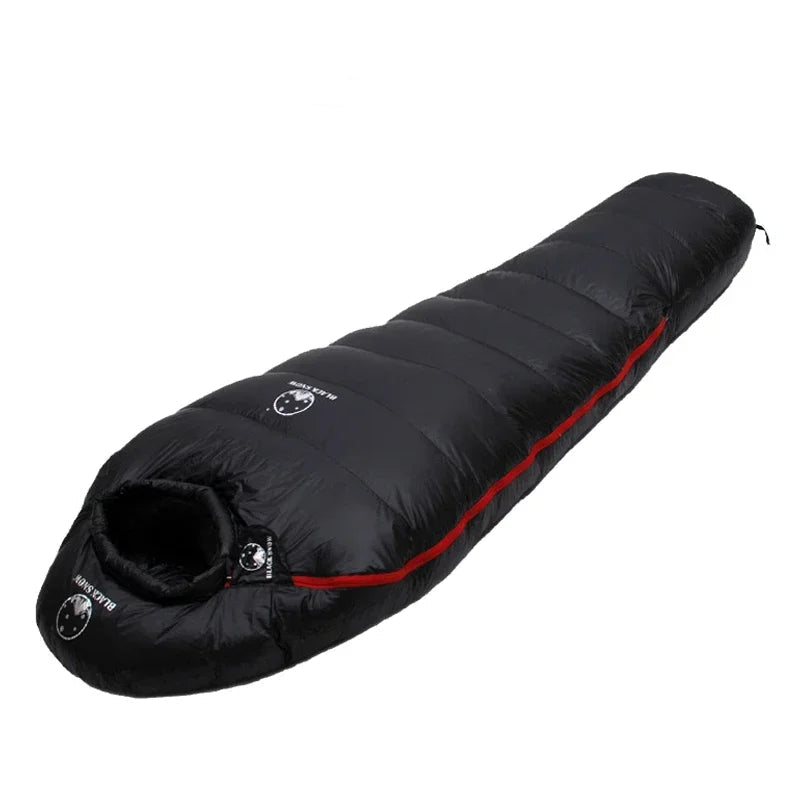
The Blacksnow -5 degree trekking sleeping bag is designed for long-distance treks in cold weather where equipment is used daily. It features nearly a kilogram of 800-fill power goose down, offering a comfort temperature of -5°C and a limit temperature of -10°C, with a total weight of 1,450 g.
Resilience of down to repeated compression
The generous use of 800-fill power goose down retains its insulating loft despite daily compression in the stuff sack during multi-day treks. The reinforced footbox prevents feet from crushing the insulation in this sensitive area.
Envelope shape: an alternative to the mummy cut for extreme cold
Unlike other Blacksnow models with a mummy cut, this version features an envelope shape, which allows for greater leg movement while maintaining the same fill density—a sensible compromise for a winter sleeping bag carried over several days of hiking.
High-density nylon: resistant to frost and condensation
The high-density 400T nylon effectively repels frost and condensation that form on tent walls in extreme cold, an essential point of protection for the insulation on a trekking sleeping bag designed for nights below freezing.
This model is available in a down version with the same thermal characteristics: the Blacksnow down -5°.

Doubt about which bag is right for you?
The field guide helps you choose based on skill level, temperature, needs, and weight. Support answers specific questions.
Find my bag Contact supportFrequently Asked Questions
The Blacksnow has a comfort temperature of -5°C and a lower limit temperature of -10°C. These values apply under standard conditions: sleeper in thermal base layers, on an insulated sleeping mat. It is designed for hiking, bivouacking use (3-4 seasons).
The Blacksnow is filled with 800 cuin. The Blacksnow weighs 1450 g, which places it in the standard category.
For multi-day trekking, the main criterion is weight: aim for under 1 kg, ideally between 600 g and 900 g. A high-loft down bag (700 cuin minimum) makes this possible while keeping enough insulation for mountain nights. The comfort temperature should match the area and season: 0°C to +3°C for the Alps and Pyrenees in summer.
Hiking generally means a day outing with no overnight stay, while trekking involves several days of walking with wild camping or nights in mountain huts. The distinction matters when choosing a sleeping bag: on a day hike, no bag is needed. When trekking, weight and packed size become decisive because the bag is carried every day.
In France, night-time mountain temperatures range between 0°C and +10°C in summer depending on altitude and area. A bag with a comfort rating between 0°C and +3°C covers almost all French routes (GR20, GR5, Tour du Mont Blanc) from June to September. Above 3,000 m or outside summer, allow an extra safety margin.